Thai Ginger
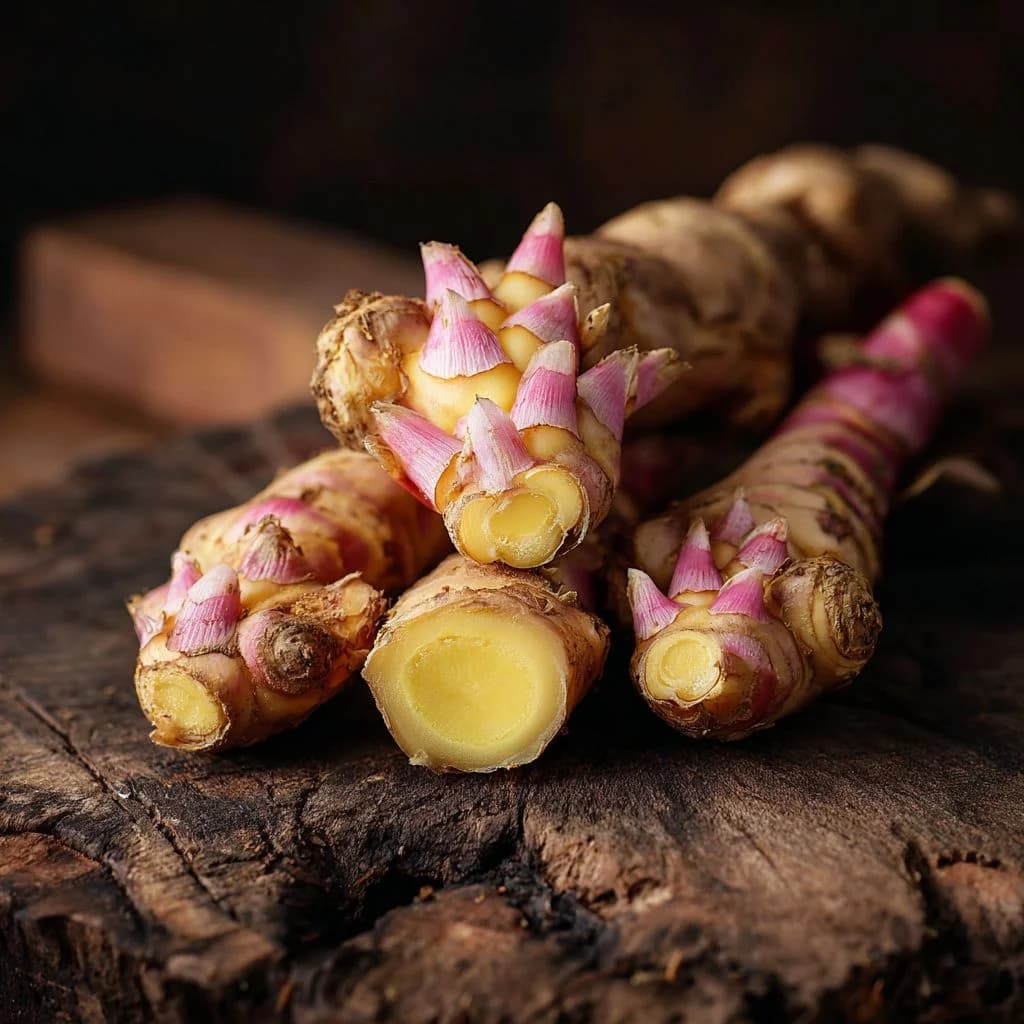
Thai Ginger at a glance
- Botanical Name
- Alpinia galanga
- Family
- Zingiberaceae
- Thai Name
- ข่า (kha)
- Origin
- Southeast Asia
- Part Used
- Rhizome
- Note Position
- Heart, sharp
Aroma Profile
Bright, spicy, and warmly aromatic. Thai ginger (galangal, Alpinia galanga) is sharper and more resinous than common ginger, with a piney, almost medicinal quality alongside its heat.
- Piney
- Sharp
- Resinous
- Peppery
- Bright
- Citric
Historical Uses
Galangal has been cultivated and traded in Southeast Asia for thousands of years, and it reached the Arab world and medieval Europe as a prized spice along the ancient trade routes. In medieval European cooking and in Arab medical texts, galangal was considered a luxury spice with warming properties. In Thailand and across Southeast Asia, galangal is a kitchen essential: it is one of the defining aromatics of tom kha gai and appears in curry pastes, spice blends, and aromatic preparations throughout the region. It also has a documented place in traditional Thai herbal practice, appearing in compresses, teas, and topical preparations.
Folklore & Trade
Thailand named a national dish after this root and then let the rest of the world mishear it. Tom kha gai is boiled kha with chicken, so the soup is named for the galangal rather than for the coconut or the chilli, and a Thai cook would no sooner substitute ginger into it than swap the chicken. Europe, meanwhile, spent the Middle Ages using galangal without ever seeing the plant. It arrived dried along the overland routes, expensive and mysterious, and Hildegard of Bingen wrote about it approvingly in twelfth century Rhineland without any idea what it grew on. Then it vanished from European kitchens almost completely for four hundred years, which is why it now reads as exotic in places that once cooked with it routinely.
Modern Uses
Galangal is experiencing broader interest in global cooking and in craft aromatics. Its distinctive sharp, resinous, spicy character is difficult to replicate and makes it an immediately recognizable ingredient in any blend that includes it.
From the Apothecary
Galangal is the ingredient that tells you a blend was made by someone who knows Thailand. Common ginger is warm and sweet and comfortable, and kha is none of those: it is piney, sharp, almost turpentine at the edges, with a brightness closer to citrus than to spice. It is not the easy choice. In Vitality it is the reason the blend has a spine instead of just an energy.
Pairs With
Smell It For Yourself
Thai Ginger is in the Smiling Tiger blends below, hand-assembled in the USA and shipped from here.
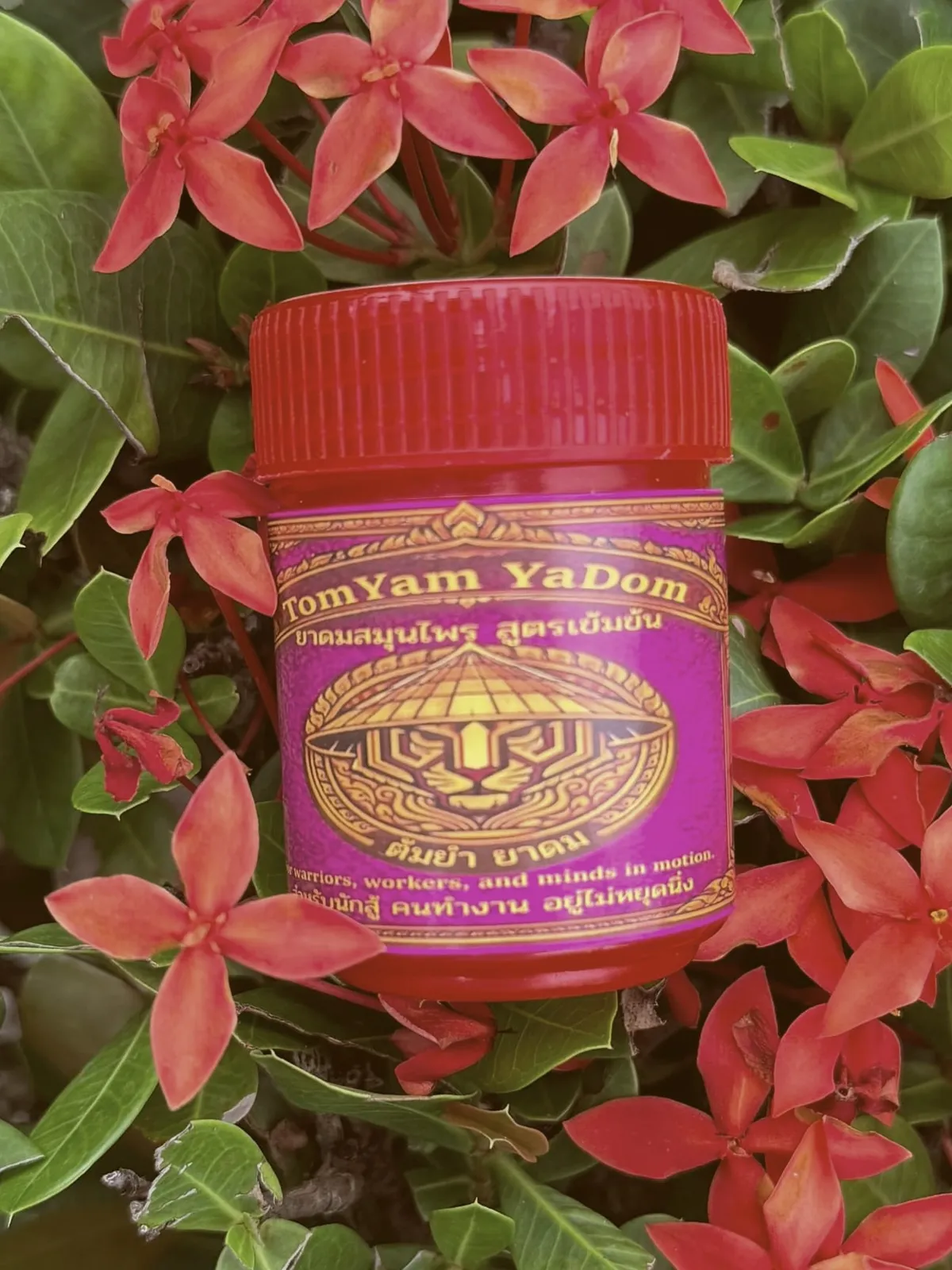 VitalityEnergy. Confidence. Drive.$20
 Morning RitualFor the hours you need to think.$54
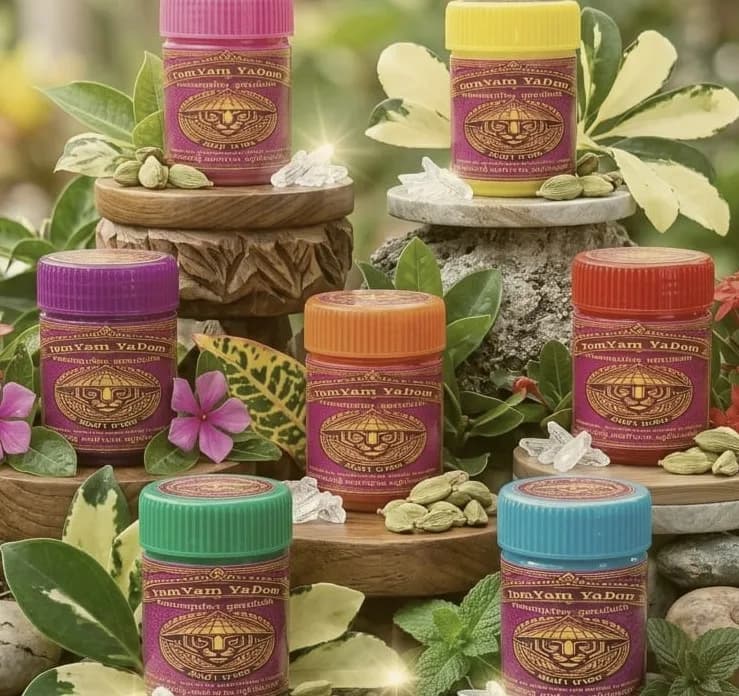 Complete Ritual SetYour complete Thai apothecary. All 7 signature scents plus Crown Blend Oil.$115
Want it on its own terms? Put Thai Ginger in a blend you build yourself.
Common Questions
What does Thai ginger smell like?
Thai ginger smells sharp, piney, and resinous, with a peppery bite and a bright, almost citric edge. It is considerably more assertive than common ginger and has none of its rounded sweetness. The character is distinctive enough that it is very difficult to substitute.
Is galangal the same as ginger?
No. Galangal is Alpinia galanga and common ginger is Zingiber officinale, two different plants in the same family, and Thai cooking treats them as entirely separate ingredients. Galangal is sharper, pinier, and more resinous, while ginger is warmer and sweeter. Swapping one for the other changes a dish or a blend completely.
Which blend uses Thai ginger?
Thai ginger is in Vitality, where its sharp, resinous brightness drives the blend and the allspice and Fuji pear round it off. It is not one of the seven base herbs. You can add it to a custom blend in the builder.
The historical and traditional information presented on this page is for educational and cultural interest only. Tom Yam Yadom products are not intended to diagnose, treat, cure, or prevent any disease or medical condition. Ingredient histories reflect traditional and cultural uses across various societies and are not claims about the properties of our products.