Thai Royal Basil
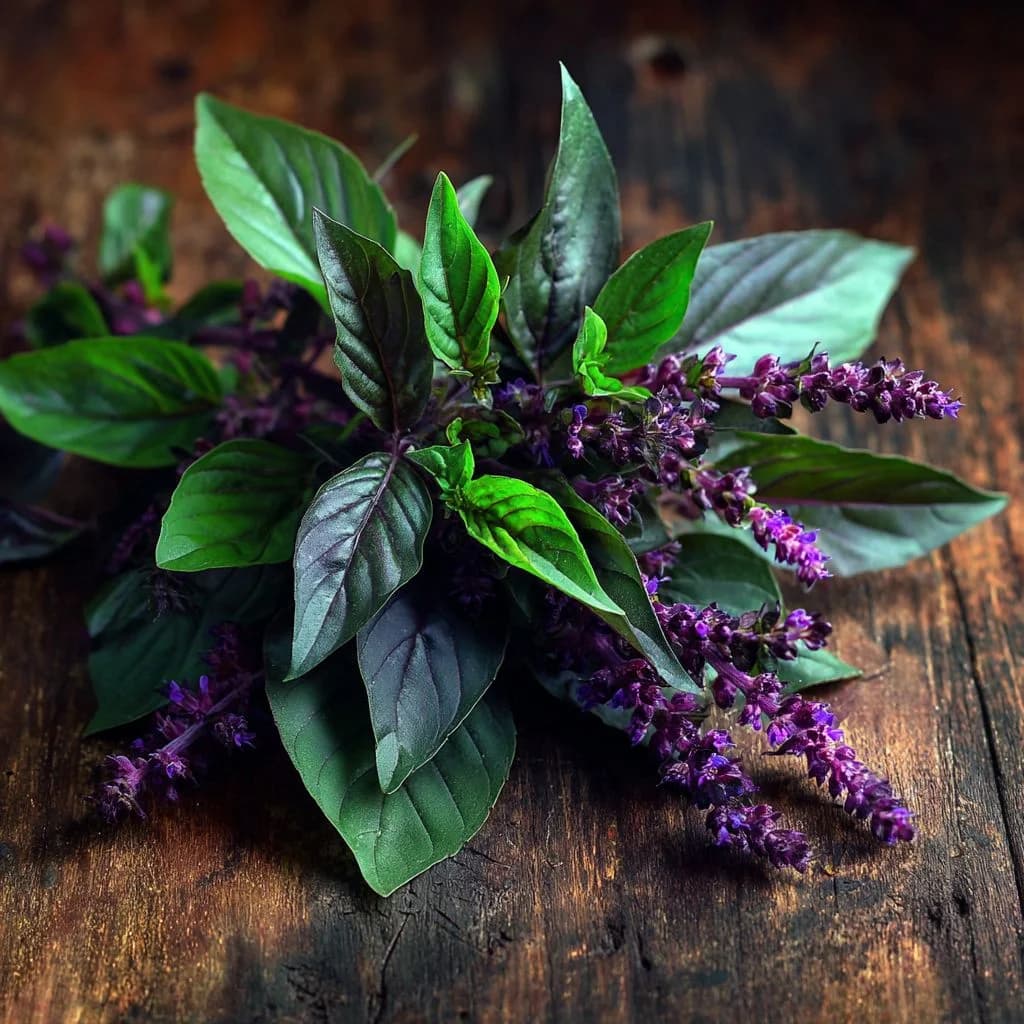
Thai Royal Basil at a glance
- Botanical Name
- Ocimum basilicum var. thyrsiflorum
- Family
- Lamiaceae
- Thai Name
- โหระพา (horapha)
- Origin
- Southeast Asia
- Part Used
- Leaf
- Note Position
- Top, green
Aroma Profile
Green, spicy, and slightly anise-like. Thai royal basil (horapa, Ocimum basilicum var. thyrsiflorum) is more assertive than Italian sweet basil, with a peppery edge and a clove-like warmth underneath its green freshness.
- Green
- Anise
- Peppery
- Fresh
- Spicy
- Clove-like
Historical Uses
Basil has been cultivated across Asia and the Mediterranean since antiquity. In South Asian tradition, holy basil (tulsi) is considered sacred in Hinduism and has been used in ritual and aromatic practice for thousands of years. In Thailand, several distinct basil varieties each hold their own culinary and cultural place: Thai royal basil (horapa) is the variety used in stir-fries, curries, and aromatic preparations, and it is one of the defining flavors of Thai cooking. Basil cultivation spread westward from Asia to the Middle East and then to Europe, where it became central to Mediterranean cooking and, eventually, to the fine herb tradition of French cuisine.
Folklore & Trade
Thailand cooks with three basils and the rest of the world tends to see one. Horapha, this one, has purple stems and an anise sweetness and goes into green curry and stir fries. Kaphrao, holy basil, is peppery and slightly hairy and is the entire point of pad kaphrao, the dish most foreigners order and most kitchens abroad make with horapha instead, because kaphrao does not travel or keep. Maenglak, lemon basil, is different again and goes into soups. Substituting between them is not a small liberty: a Thai cook can identify which one is in a dish from across the room, and getting horapha in a pad kaphrao is the culinary equivalent of a wrong note held for the length of the meal.
Modern Uses
Thai royal basil is an essential ingredient in Thai cuisine and is gaining recognition in global cooking for its distinctive spicy, anise-inflected character. In natural perfumery and craft aromatics, basil's green, spicy complexity adds a fresh, herbal energy that contrasts cleanly with warmer or heavier notes.
From the Apothecary
Basil in an inhaler surprises people, which is a good sign. It brings something none of the other green notes manage: a peppery, anise-edged freshness with a clove warmth hiding underneath it, so it works as a top note and still connects to the spice below. Power is a demanding blend with peppermint and cinnamon oil both pulling hard, and horapha is what stops those two from simply cancelling each other.
Pairs With
Smell It For Yourself
Thai Royal Basil is in the Smiling Tiger blends below, hand-assembled in the USA and shipped from here.
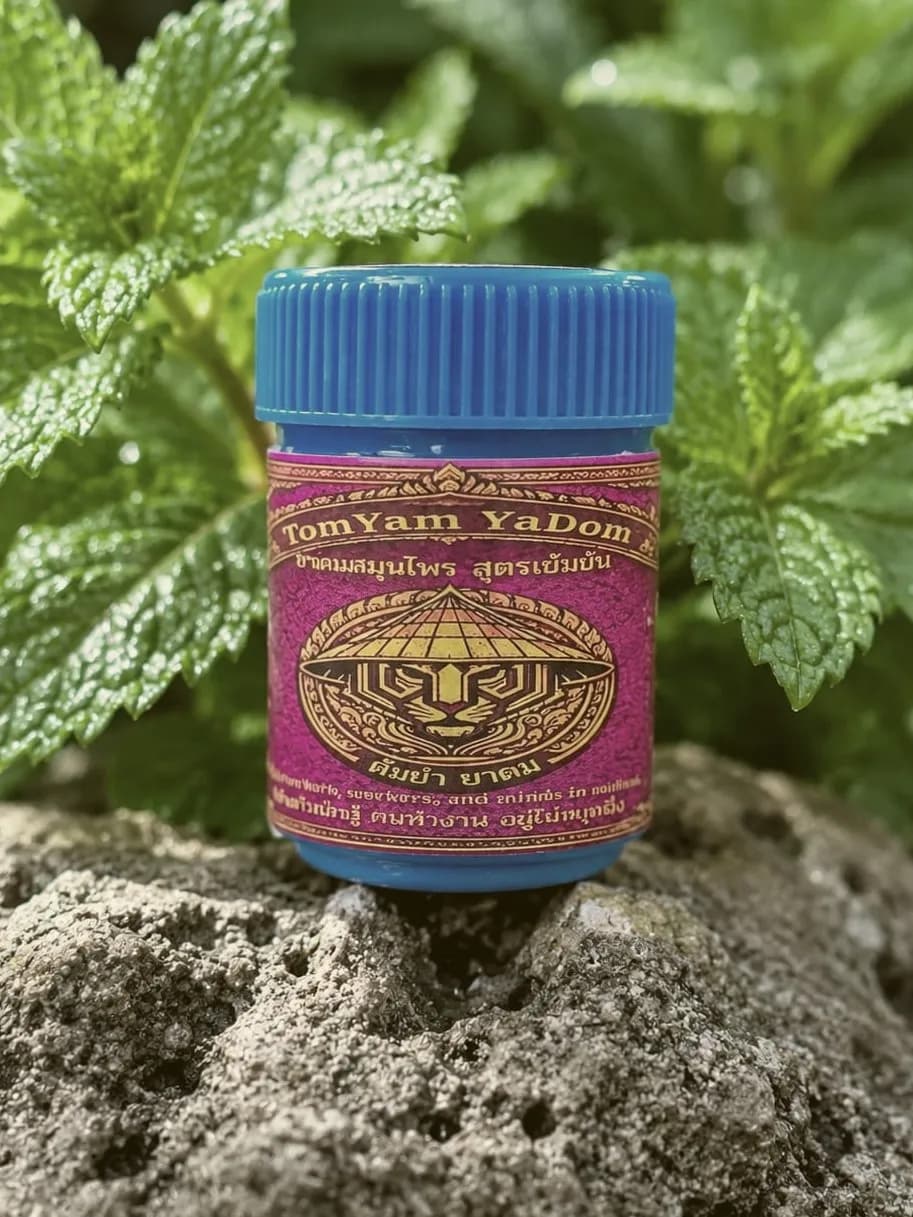 PowerThe morning hit. The pre-fight breath.$20
 Morning RitualFor the hours you need to think.$54
 Travel RitualFor the car, the plane, the bag.$54
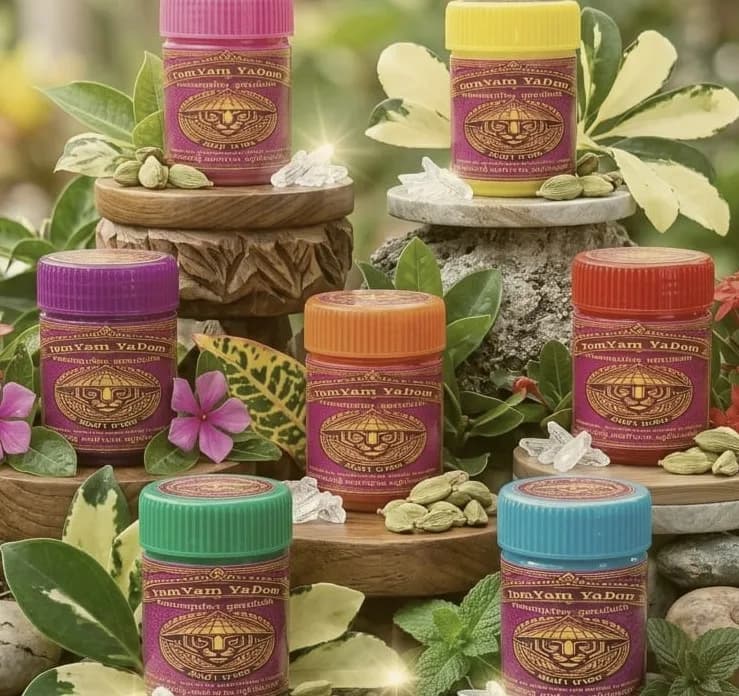 Complete Ritual SetYour complete Thai apothecary. All 7 signature scents plus Crown Blend Oil.$115
Want it on its own terms? Put Thai Royal Basil in a blend you build yourself.
Common Questions
What does Thai royal basil smell like?
Thai royal basil smells green and peppery with a distinct anise sweetness and a clove-like warmth underneath. It is more assertive and more spiced than Italian sweet basil, which is comparatively soft and grassy. In a blend it reads as fresh energy rather than as a herb garden.
Is Thai basil the same as holy basil?
No. Thai royal basil is horapha, sweet and anise-inflected with purple stems, while holy basil is kaphrao, peppery and sharper, and Thai cooking keeps them firmly apart. Most pad kaphrao served outside Thailand is actually made with horapha because kaphrao does not keep well in export.
Which blend uses Thai royal basil?
Thai royal basil is in Power, where it bridges the peppermint oil above and the cinnamon oil below so the blend holds together. It is not one of the seven base herbs. You can add it to a custom blend in the builder.
The historical and traditional information presented on this page is for educational and cultural interest only. Tom Yam Yadom products are not intended to diagnose, treat, cure, or prevent any disease or medical condition. Ingredient histories reflect traditional and cultural uses across various societies and are not claims about the properties of our products.