Star Anise
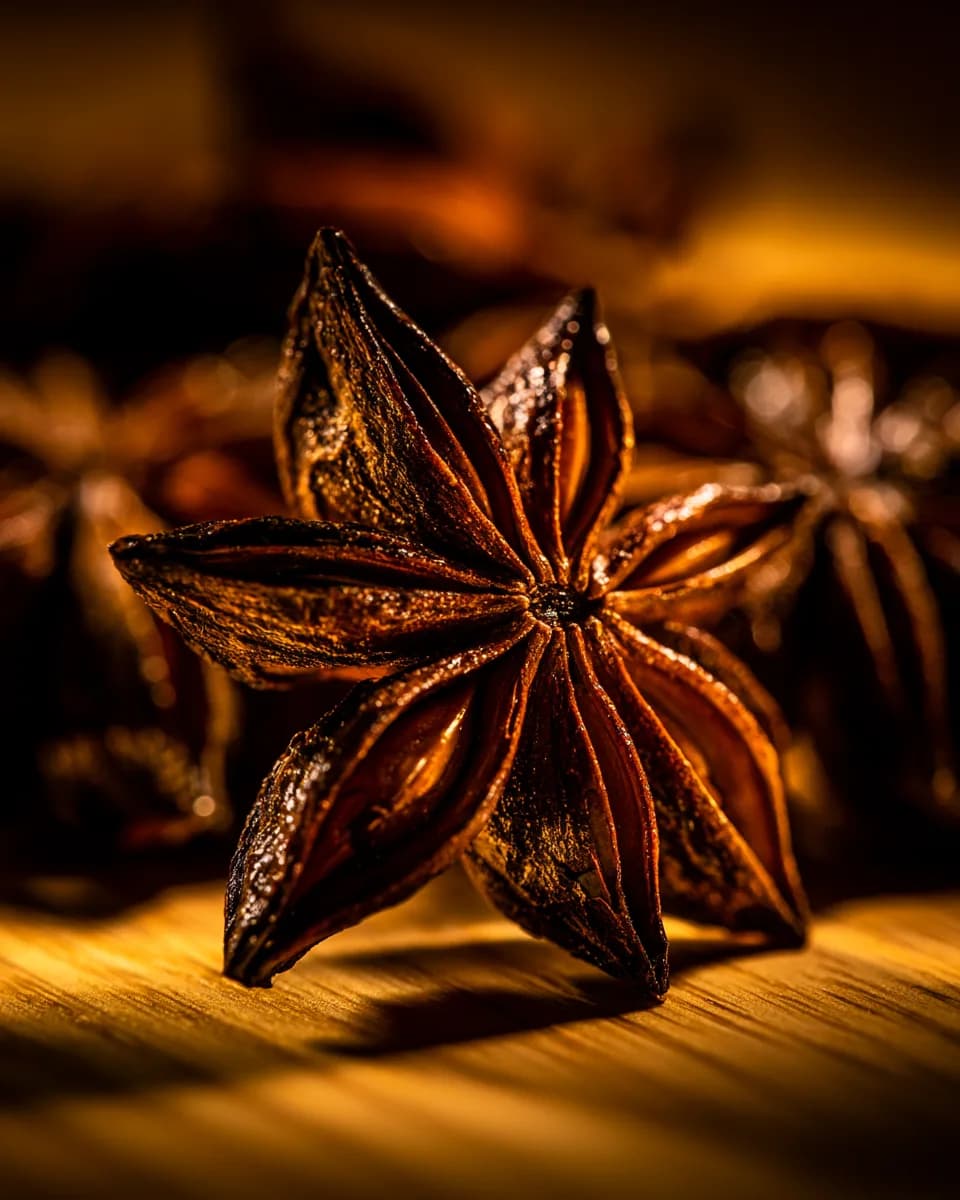
Star Anise at a glance
- Botanical Name
- Illicium verum
- Family
- Schisandraceae
- Thai Name
- โป๊ยกั๊ก (poi kak)
- Origin
- Southwest China and northern Vietnam
- Part Used
- Dried fruit
- Note Position
- Base, lingering
Aroma Profile
Warm, sweet, and deeply anise-like, with a richness that goes beyond simple licorice. Star anise has a rounded, almost balsamic depth beneath its sweetness, and a lingering warmth that makes it one of the most distinctive and immediately recognizable aromatics in the spice world.
- Sweet
- Anise
- Balsamic
- Warm
- Resinous
- Rounded
Historical Uses
Star anise (Illicium verum) is native to southwestern China and northern Vietnam, where it has been cultivated and prized for thousands of years. In Chinese culinary tradition it is one of the five spices that make up the foundational five-spice blend (alongside cloves, cinnamon, Sichuan pepper, and fennel seeds), a combination that has defined the flavor of Chinese braised meats, roasted duck, and slow-cooked dishes for centuries. In Vietnamese cooking, star anise is essential to pho, the aromatic broth that is both a national dish and a daily ritual across the country, where whole pods are charred and added to the stock to build its signature deep, sweet complexity. Beyond the kitchen, star anise held a place in Chinese traditional practice as a valued aromatic, appearing in incense preparations and in the broader herbal traditions of the region. Along the ancient maritime spice routes, star anise traveled from Southeast Asia to the Arab world and eventually to Europe, where it was embraced by distillers and confectioners alike. It became a key botanical in the production of anise-flavored spirits across France, Greece, Turkey, and the Middle East, appearing in pastis, arak, ouzo, and sambuca. In European folk tradition, star anise was also used to flavor breads, pastries, and mulled drinks, and its striking eight-pointed form made it a favorite decorative element in spice displays and aromatic arrangements.
Folklore & Trade
Star anise has a double, and telling them apart matters. Japanese star anise, Illicium anisatum, grows on a closely related tree, forms the same eight pointed shape, and is poisonous. In Japan it is called shikimi and was never a food at all: it is a temple and grave plant, its branches placed at Buddhist memorials and its bark burned as incense, chosen partly because deer and insects leave it alone. The two species can be separated by smell if you know them, since shikimi is sharper and less sweet, and by shape under close inspection, but consignments have been confused in trade more than once. The Thai name, poi kak, comes straight from the Chinese for eight horns, which is the most reliable thing about the fruit: the shape it is named for.
Modern Uses
Star anise remains a cornerstone of both Asian and European culinary traditions, appearing in spice blends, braises, marinades, confectionery, and spirits production worldwide. Its essential oil is widely used in the flavor industry and in natural perfumery, where its warm, sweet, anise character adds depth and a slightly exotic richness to oriental and spice-forward compositions. In craft aromatics and artisanal blending, star anise contributes a rounded, lingering warmth that anchors a blend and gives it staying power, making it a natural choice wherever a sweet, resinous base note is needed.
From the Apothecary
Star anise is the anchor. It sits lower than almost anything else in the apothecary and it stays put, which is exactly what a blend full of florals and eucalyptus needs underneath it. There is a sweetness in it that reads as calm rather than as sugar, and that is a rare and useful thing. Serenity is named for what this ingredient does.
Pairs With
Smell It For Yourself
Star Anise is in the Smiling Tiger blends below, hand-assembled in the USA and shipped from here.
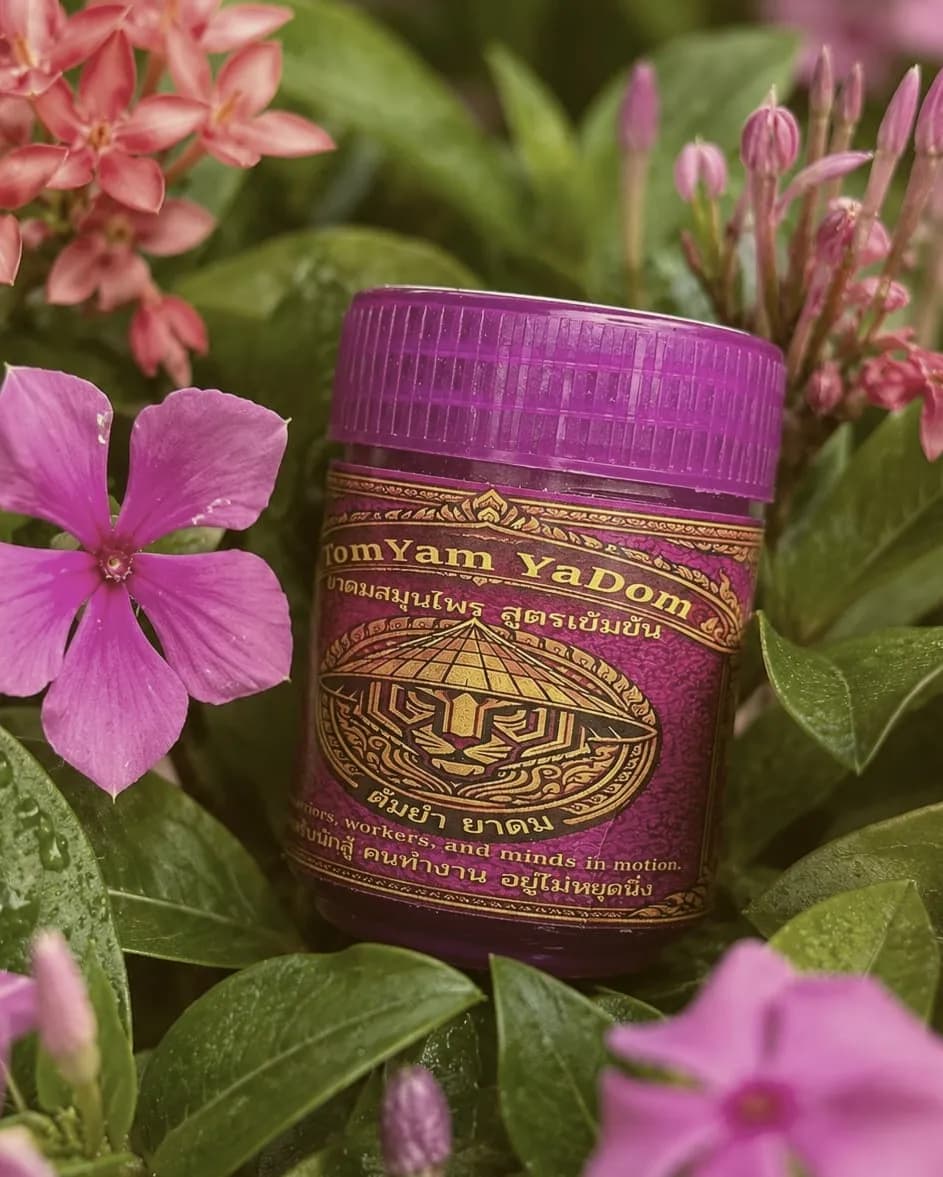 SerenityCalm the mind. Slow the breath.$20
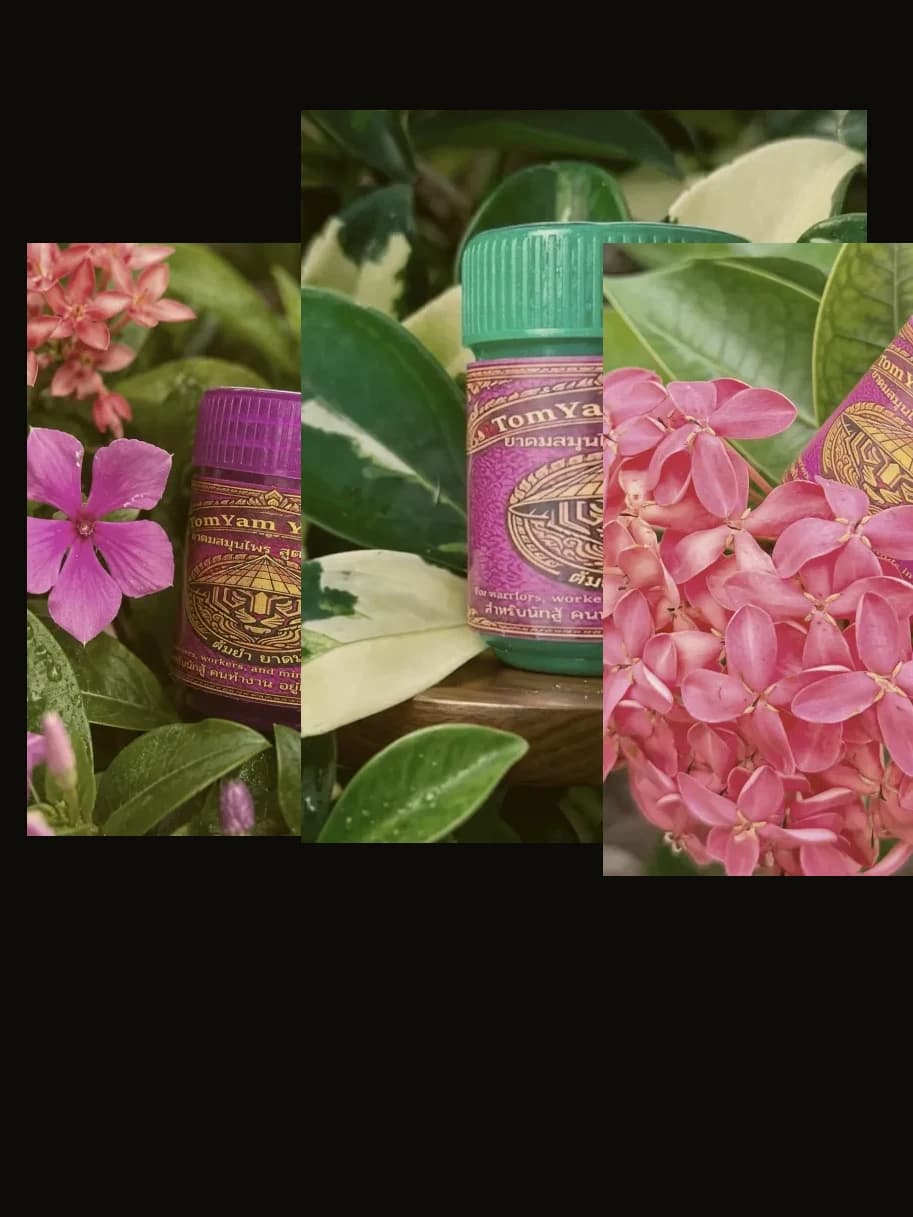 Evening RitualFor the end of the day.$54
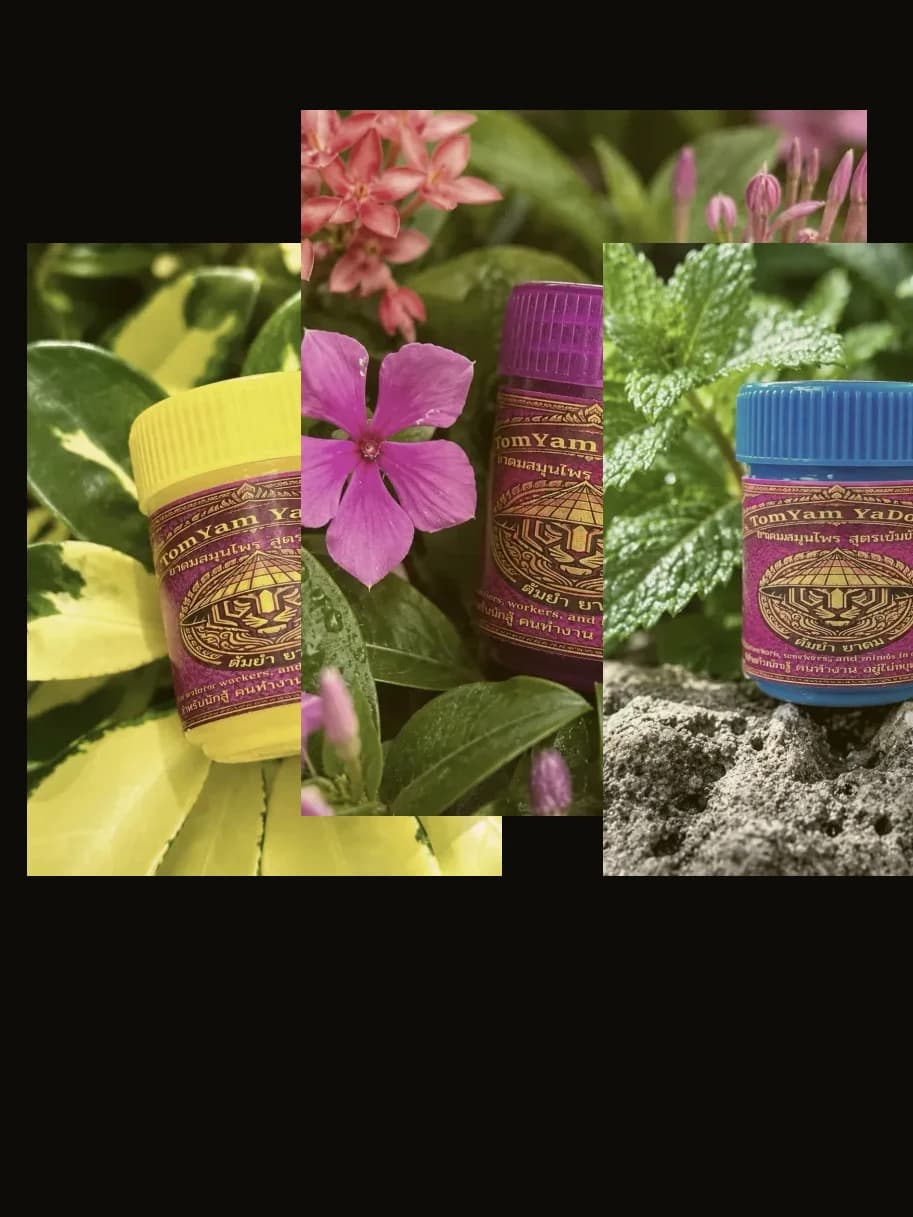 Travel RitualFor the car, the plane, the bag.$54
 Complete Ritual SetYour complete Thai apothecary. All 7 signature scents plus Crown Blend Oil.$115
Want it on its own terms? Put Star Anise in a blend you build yourself.
Common Questions
What does star anise smell like?
Star anise smells warm and sweet with a deep anise character that goes well beyond simple licorice, carrying a rounded, almost balsamic depth underneath. It lingers longer than most aromatics in a blend. The impression is closer to calm than to spice.
Is star anise related to aniseed?
No, and they are not even close. Aniseed comes from Pimpinella anisum, a small plant in the carrot family, while star anise is the fruit of an evergreen tree in an unrelated family. They smell similar because they share a major aromatic compound, anethole. In blending they are not interchangeable, since star anise is rounder and much deeper.
Which blend uses star anise?
Star anise is in Serenity, where it provides the low, sweet base that the jasmine and eucalyptus sit on top of. It is not one of the seven base herbs. You can add it to a custom blend in the builder.
The historical and traditional information presented on this page is for educational and cultural interest only. Tom Yam Yadom products are not intended to diagnose, treat, cure, or prevent any disease or medical condition. Ingredient histories reflect traditional and cultural uses across various societies and are not claims about the properties of our products.