Cinnamon Oil
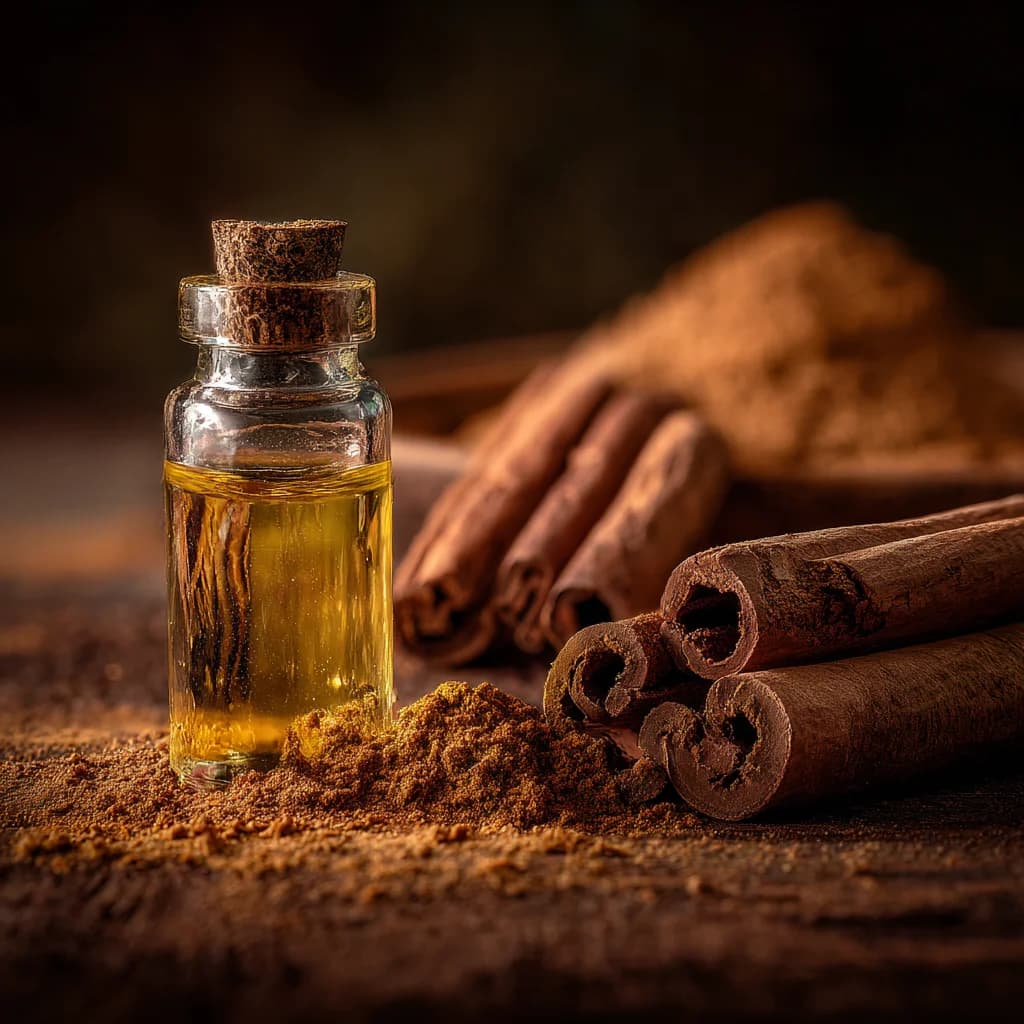
Cinnamon Oil at a glance
- Botanical Name
- Cinnamomum verum
- Family
- Lauraceae
- Thai Name
- น้ำมันอบเชย (nam man op choei)
- Origin
- Sri Lanka and Southeast Asia
- Part Used
- Steam distilled bark
- Note Position
- Heart, with a warm base
Aroma Profile
Warm, concentrated, and intensely sweet-spiced. Cinnamon oil is the distilled essence of cinnamon bark: richer, more volatile, and more penetrating than the dried spice, with an immediate heat that blooms quickly and lingers. Where dried cinnamon is familiar and rounded, the oil is bolder and more alive, a concentrated version of one of the world's most recognized aromatics.
- Warm
- Concentrated
- Sweet-spiced
- Penetrating
- Rich
- Lingering
Historical Uses
Cinnamon has been traded, valued, and written about for longer than almost any other spice. True cinnamon (Cinnamomum verum) is native to Sri Lanka, and records of its trade reach back over 4,000 years to ancient Egypt, where cinnamon was imported for embalming, ritual, and as a luxury aromatic. It appears in the Hebrew Bible, in ancient Greek and Roman texts, and in the earliest Sanskrit writings on spice and medicine. The distillation of cinnamon oil developed alongside the broader history of essential oil extraction, which advanced significantly in the Arab world during the medieval period before spreading to Europe. Arab physicians and scholars documented cinnamon extensively, and distilled aromatic preparations using cinnamon were part of the medieval Islamic apothecary tradition. In Europe, cinnamon oil became part of the formal pharmacopoeia from the early modern period onward, used in aromatic and flavoring preparations by apothecaries and perfumers alike. Two distinct oils are produced from the cinnamon plant: bark oil and leaf oil. Cinnamon bark oil is the richer, more prized of the two, with a deep, sweet, intensely warm character. Cinnamon leaf oil is sharper and more phenolic. Both have been used in aromatic and flavoring contexts across Asia, the Middle East, and Europe for centuries. In Southeast Asia, cassia (Cinnamomum cassia), a close relative of true cinnamon, has been cultivated and used in cooking and aromatic practice for thousands of years. It is a foundational spice in Chinese five-spice, Vietnamese pho, and Thai massaman curry, and its oil carries the same warm, sweet-spiced character in a slightly more robust form.
Folklore & Trade
The bark that becomes this oil was peeled, for generations, by people who had no choice about it. Under Dutch rule in Ceylon the work belonged to the Salagama, a caste whose obligation to peel cinnamon was hereditary and enforced by quota, and the skill involved is genuinely difficult: the inner bark has to come away in a continuous sheet, from a shoot of the right age, with a knife shaped for nothing else. Too deep and the wood ruins the flavour, too shallow and the quill will not roll. The Dutch guarded the trade with the death penalty for unauthorised trees, the British inherited it, and the technique survived all of them essentially unchanged, still hand work, still learned by watching.
Modern Uses
Cinnamon oil is a valued ingredient in natural perfumery, specialty food and beverage, craft spirits, and artisanal aromatics. In perfumery it functions as a warm, sweet base note with excellent staying power, adding depth and a familiar comfort to any composition it enters. Its concentration means a small amount goes a long way, making it a precision ingredient rather than a background filler. In craft cocktails and specialty baking, cinnamon oil is used where the dried spice would add texture but not enough aromatic intensity. It appears in bitters, syrups, chocolate work, and flavored spirits where a clean, pure cinnamon note is needed without physical bulk. In herbal inhaler blending, cinnamon oil contributes a concentrated warmth that rounds and deepens cooler, sharper notes. It adds a sweet-spiced backbone that makes a blend feel complete and grounded rather than one-dimensional.
From the Apothecary
Concentration changes what an ingredient is for. Dried cinnamon is a background warmth you can be generous with, and cinnamon oil is a precision instrument that will take over a blend if you let it. We use it in drops. What it gives back is staying power: a blend with cinnamon oil in it is still recognisably itself an hour later, which is not true of most bright compositions.
Pairs With
Smell It For Yourself
Cinnamon Oil is in the Smiling Tiger blends below, hand-assembled in the USA and shipped from here.
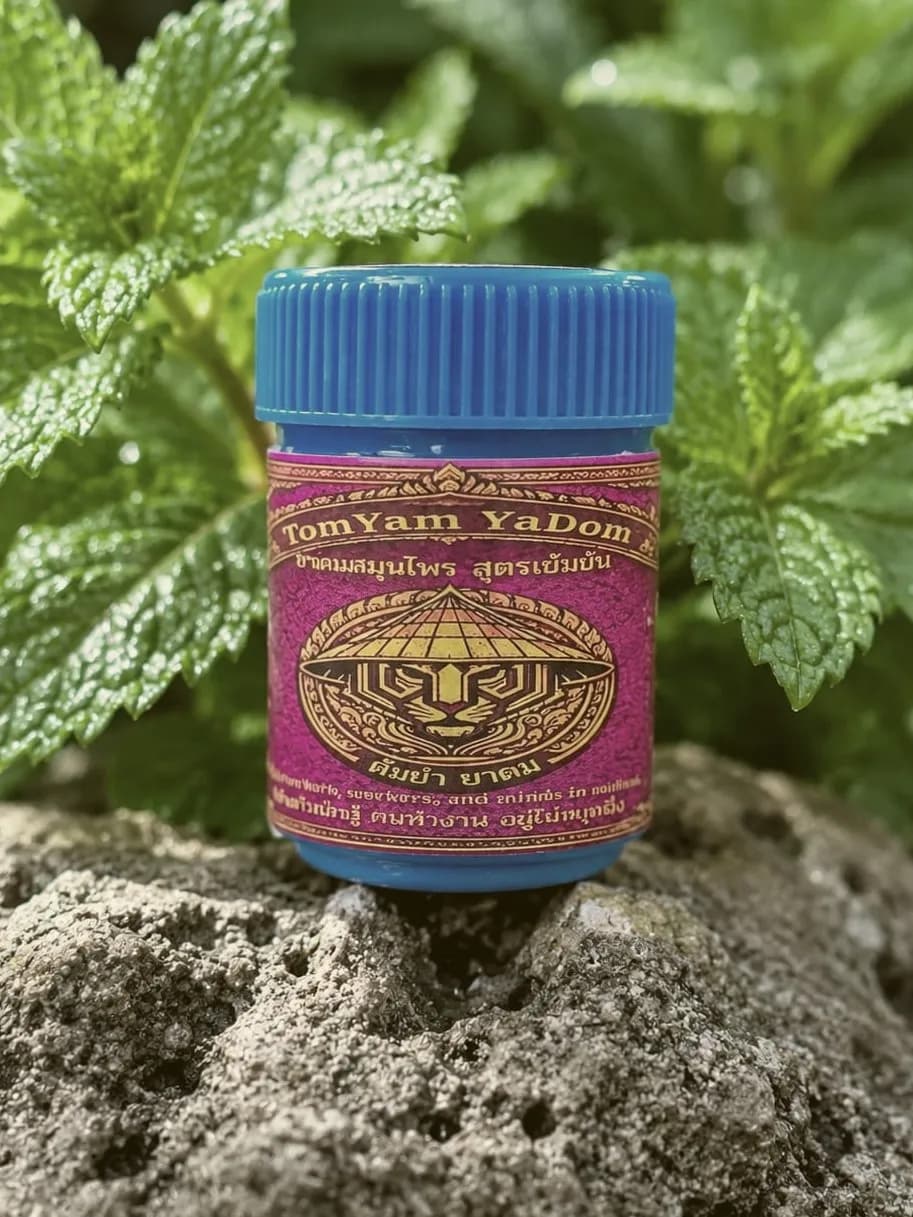 PowerThe morning hit. The pre-fight breath.$20
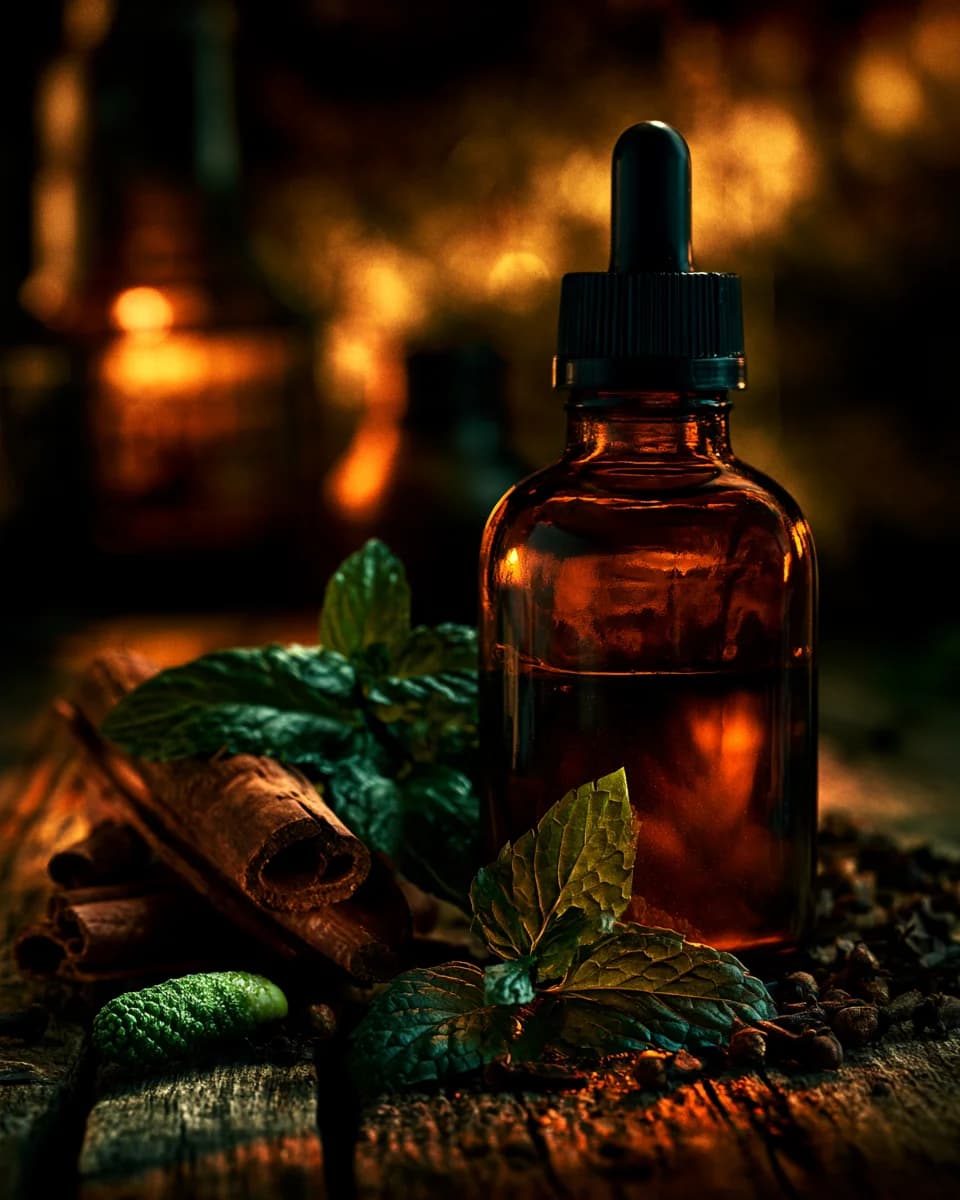 Crown BlendThe concentrated ritual. Stronger. Deeper.$30
 Morning RitualFor the hours you need to think.$54
 Travel RitualFor the car, the plane, the bag.$54
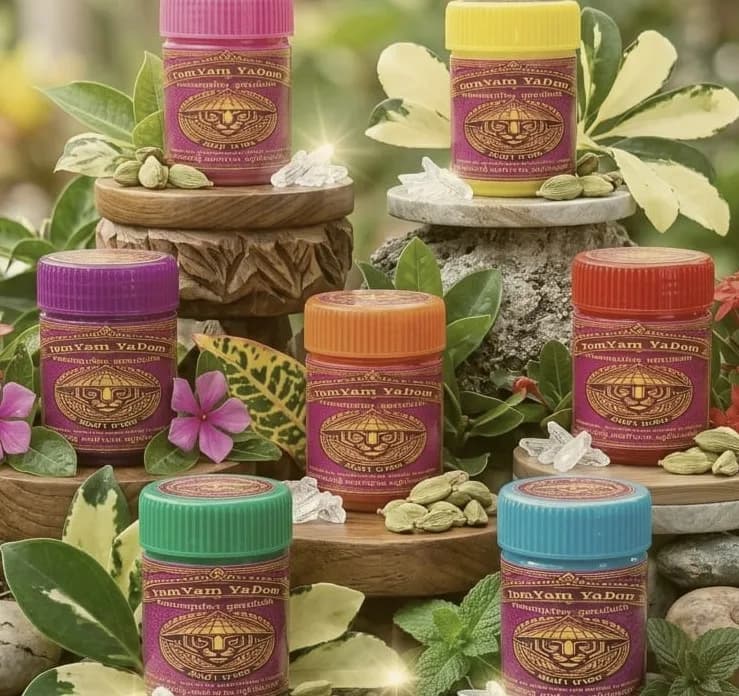 Complete Ritual SetYour complete Thai apothecary. All 7 signature scents plus Crown Blend Oil.$115
Want it on its own terms? Put Cinnamon Oil in a blend you build yourself.
Common Questions
What does cinnamon oil smell like?
Cinnamon oil smells like cinnamon with the volume raised and the edges sharpened, richer and more penetrating than the dried spice with an immediate heat that blooms and then lingers. Where the stick is comforting and rounded, the oil is bolder and more alive. A very small quantity carries a long way.
What is the difference between bark oil and leaf oil?
Cinnamon bark oil is the richer and more valuable of the two, deep and sweetly warm, while leaf oil is sharper and more phenolic, closer to clove in character. They come from the same tree and are not the same material. Bark oil is what belongs in a blend built around warmth.
Which blends use cinnamon oil?
Cinnamon oil is in Power and in the Crown Blend concentrated oil, where it supplies the warm backbone underneath the peppermint and basil. It is not part of the samunprai base. You can add it to a custom blend in the builder.
The historical and traditional information presented on this page is for educational and cultural interest only. Tom Yam Yadom products are not intended to diagnose, treat, cure, or prevent any disease or medical condition. Ingredient histories reflect traditional and cultural uses across various societies and are not claims about the properties of our products.