Peppermint Oil
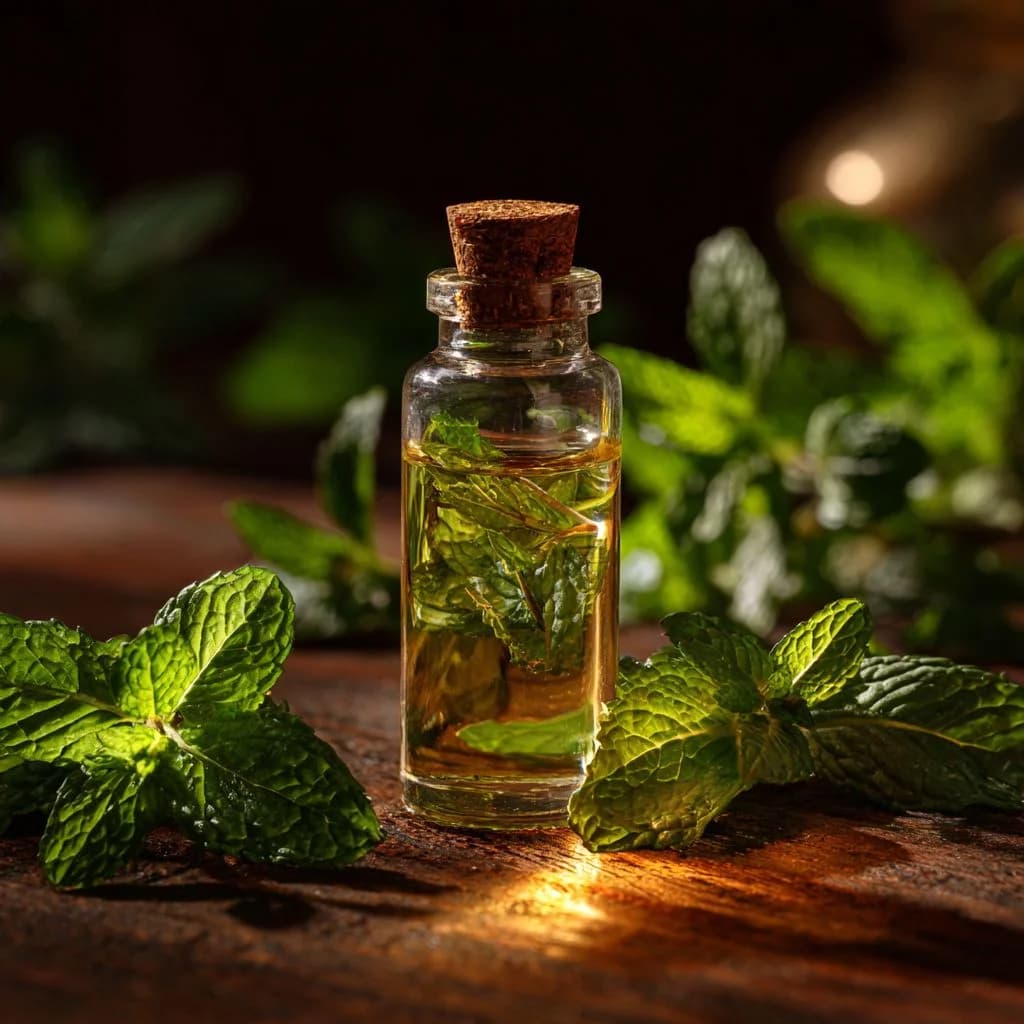
Peppermint Oil at a glance
- Botanical Name
- Mentha x piperita
- Family
- Lamiaceae
- Origin
- A European hybrid, now grown worldwide
- Part Used
- Steam distilled leaf
- Note Position
- Top, green
Aroma Profile
Sharp, green, and intensely refreshing. Peppermint oil is brighter and more vegetal than menthol alone, with a fresh, almost grassy top note alongside its cool rush.
- Green
- Sharp
- Cool
- Herbaceous
- Sweet
- Bright
Historical Uses
Peppermint (Mentha piperita) is a hybrid of watermint and spearmint, cultivated in Europe since at least the 18th century, though mint species have been used aromatically and culinarily across the Mediterranean and Middle East for thousands of years. Ancient Egyptians, Greeks, and Romans used dried mint in cooking, medicine, and ritual. In European folk tradition, peppermint was a staple of the herbalist's cabinet, used in aromatic preparations and digestive tonics. Distillation of peppermint oil became commercially significant in England and America in the 18th and 19th centuries, and by the Victorian era peppermint oil was a widely traded aromatic commodity.
Folklore & Trade
Peppermint cannot reproduce itself. It is a sterile hybrid of watermint and spearmint that happened by chance in an English field, and because its seed does not come true, every peppermint plant in the world is a cutting of a cutting, propagated by hand from that original accident. It was first recorded growing wild in Hertfordshire in the late seventeenth century, and by the Victorian era the village of Mitcham in Surrey had built a global reputation on it, Mitcham oil commanding prices no other source could match. The fields are gone under London suburbs now, but the plant itself is unchanged in the most literal sense available to botany: not a descendant of the Mitcham mint, the same one.
Modern Uses
Peppermint oil is one of the most versatile and widely used essential oils in the world, appearing in confectionery, oral care, cosmetics, and aromatics. In inhaler blends it adds a bright, green freshness that complements and extends the cooling action of menthol and camphor.
From the Apothecary
There is a reason we use peppermint oil alongside menthol and not instead of it. Isolated menthol gives you cold and nothing else, which is efficient and slightly soulless. The whole oil brings the rest of the leaf with it, a green sweetness that makes the cold read as a plant rather than as a compound. In Power it is what keeps the cooling from feeling clinical.
Pairs With
Smell It For Yourself
Peppermint Oil is in the Smiling Tiger blends below, hand-assembled in the USA and shipped from here.
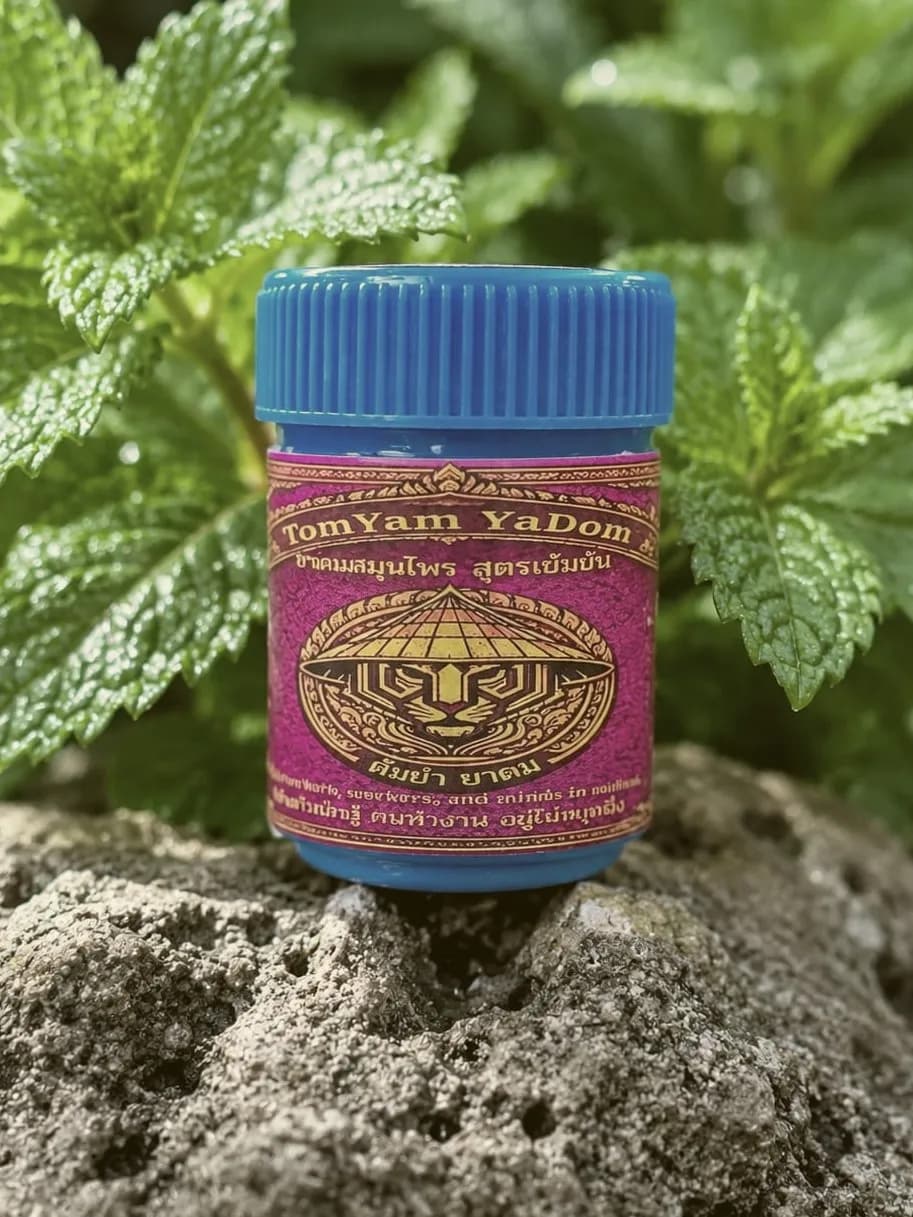 PowerThe morning hit. The pre-fight breath.$20
 Crown BlendThe concentrated ritual. Stronger. Deeper.$30
 Morning RitualFor the hours you need to think.$54
 Travel RitualFor the car, the plane, the bag.$54
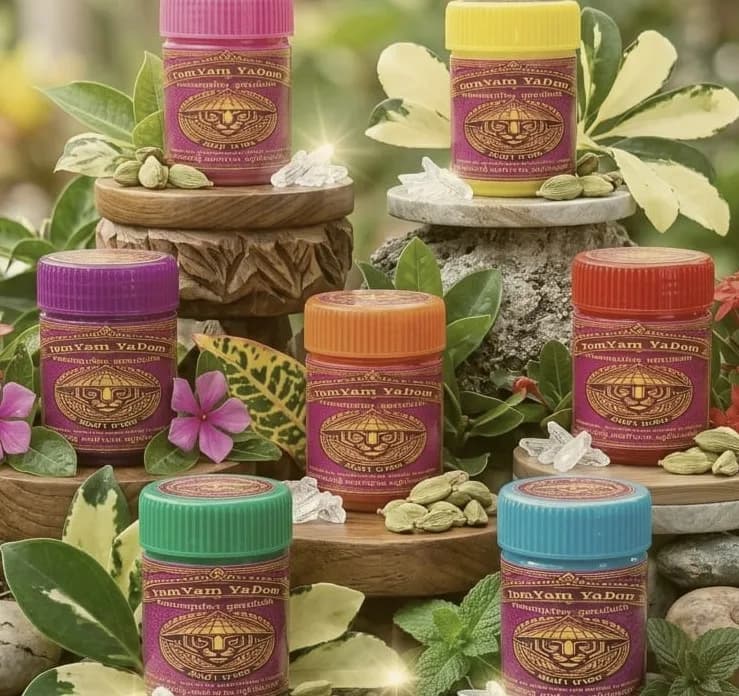 Complete Ritual SetYour complete Thai apothecary. All 7 signature scents plus Crown Blend Oil.$115
Want it on its own terms? Put Peppermint Oil in a blend you build yourself.
Common Questions
What does peppermint oil smell like?
Peppermint oil smells sharp, green, and sweet, cooler than a fresh mint leaf and far more rounded than isolated menthol. There is a grassy, herbaceous top to it that menthol crystals do not have. It reads as a plant rather than as a cooling agent, which is the point of using the whole oil.
What is the difference between peppermint oil and menthol?
Menthol is a single compound isolated out of mint oil, while peppermint oil is the whole distilled leaf with menthol as its largest component and dozens of other aromatics alongside it. The oil is greener, sweeter, and more complex. The crystal is colder and more direct. A blend that uses both gets the reach of one and the character of the other.
Which blends use peppermint oil?
Peppermint oil is in Power and in the Crown Blend concentrated oil. It is not part of the samunprai base, so it is a chosen note rather than a foundation one, and you can add it to a custom blend in the builder.
The historical and traditional information presented on this page is for educational and cultural interest only. Tom Yam Yadom products are not intended to diagnose, treat, cure, or prevent any disease or medical condition. Ingredient histories reflect traditional and cultural uses across various societies and are not claims about the properties of our products.