Camphor
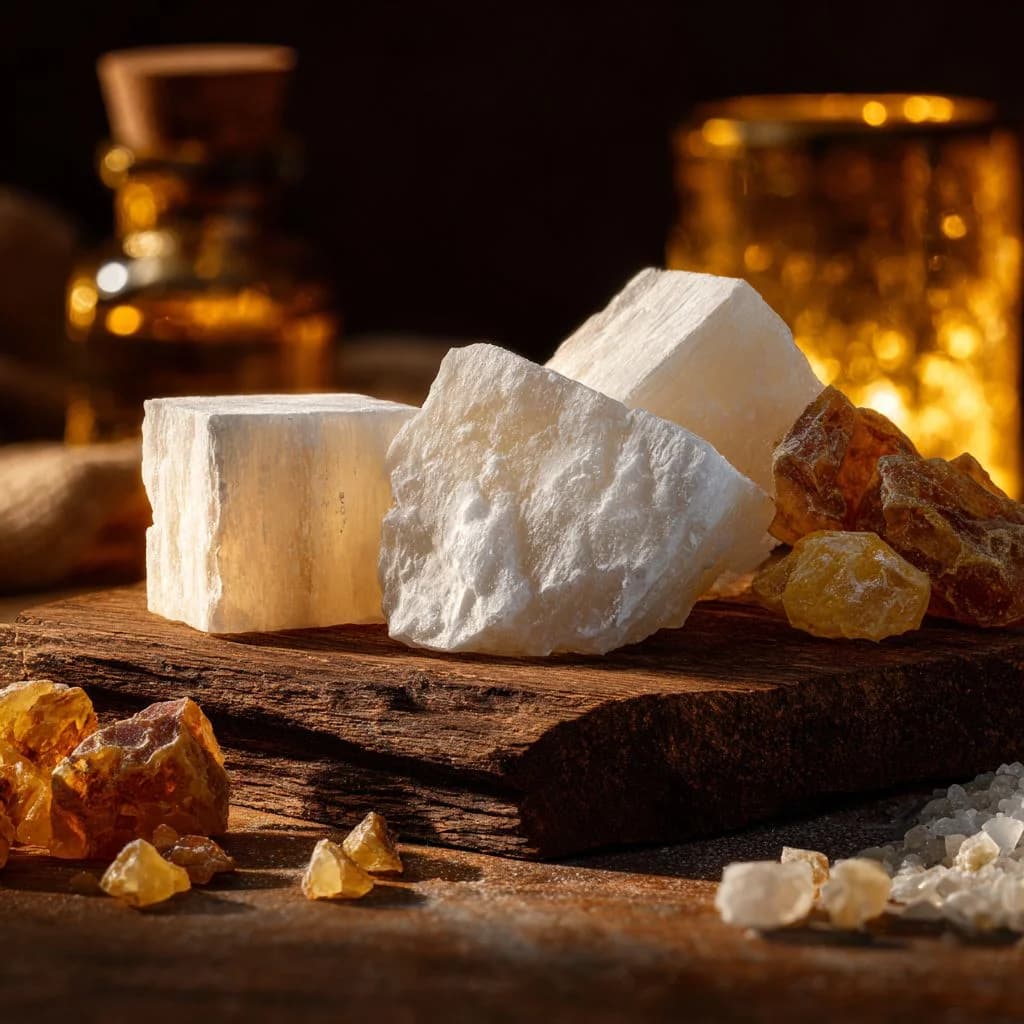
Camphor at a glance
- Botanical Name
- Cinnamomum camphora
- Family
- Lauraceae
- Thai Name
- การบูร (karabun)
- Origin
- East and Southeast Asia
- Part Used
- Crystallised from steam distilled wood
- Note Position
- Top, piercing
Aroma Profile
Intensely cooling, sharp, and penetrating. Camphor has a powerful, medicinal clarity that cuts through almost anything around it, clean and resinous with a cool that borders on cold.
- Icy
- Medicinal
- Resinous
- Woody
- Piercing
- Clean
Historical Uses
Camphor has one of the longest documented histories of any aromatic substance in the world. Derived from the wood of Cinnamomum camphora, a tree native to East and Southeast Asia, camphor was traded along the ancient Silk Road and appears in Chinese, Sanskrit, Arabic, and medieval European texts. In Chinese and Japanese traditions it was burned as incense, used in ritual contexts, and employed as an aromatic preservative. In South and Southeast Asian medicine it featured in preparations valued for its strong aromatic character. In Europe, camphor became part of the apothecary tradition and appeared in smelling salts and aromatic vinegars from the medieval period onward. Its sharp, penetrating scent made it a natural choice wherever a powerful aromatic signal was needed.
Folklore & Trade
Camphor burns completely. It leaves no ash, no residue, nothing at all, and Hindu ritual made that fact into meaning: a camphor flame is waved at the close of aarti precisely because it consumes itself without trace, the ego offered up and gone. The same substance had a far less contemplative life in trade. Camphor was essential to celluloid film and to smokeless powder, which turned a temple material into a strategic commodity, and by the end of the nineteenth century Taiwan was supplying most of the world. The Japanese colonial administration ran the island's camphor as a state monopoly, and the felling of the highland camphor forests to feed it reshaped both the mountains and the lives of the communities who lived in them. Synthetic camphor eventually ended the monopoly and, with it, the pressure on the trees.
Modern Uses
Camphor remains a key aromatic in traditional preparations across Asia and is used in natural perfumery, ritual incense, and artisanal aromatics. In herbal inhalers it is one of the primary cooling and clarifying notes, often paired with menthol and borneol to build a deep, multi-layered clarity.
From the Apothecary
Camphor is the ingredient people misjudge. Smelled on its own it is almost aggressive, so medicinal that you understand immediately why it ended up in every liniment cabinet in the world. But a blend is not a solo. Put camphor next to borneol and it stops shouting: borneol gives it a floor to stand on, and camphor gives borneol its edge back. Neither is as good alone. That pairing is most of what makes a yadom smell like a yadom.
Pairs With
Smell It For Yourself
Camphor is in the Smiling Tiger blends below, hand-assembled in the USA and shipped from here.
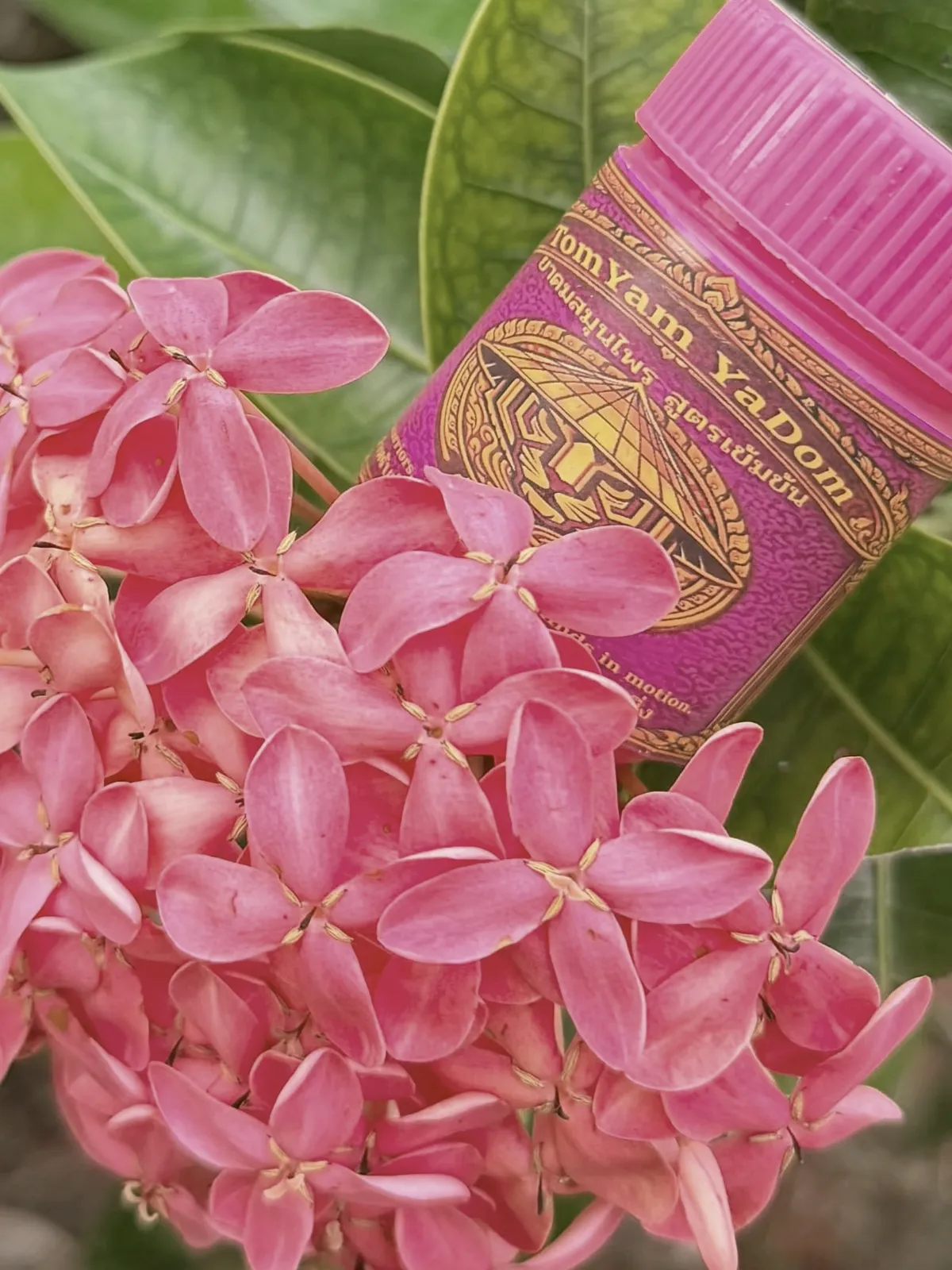 CompassionLift your mood. Open your heart.$20
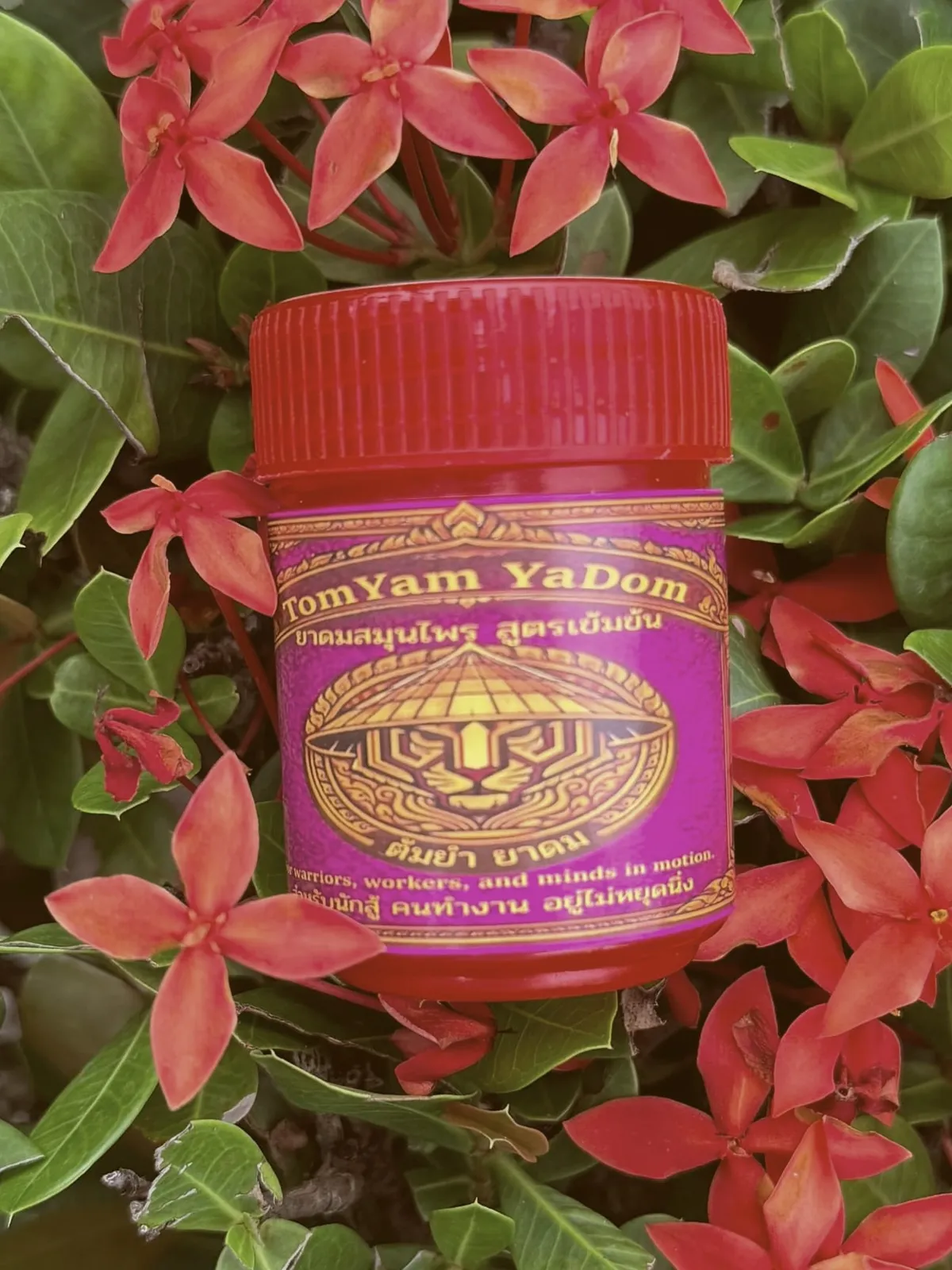 VitalityEnergy. Confidence. Drive.$20
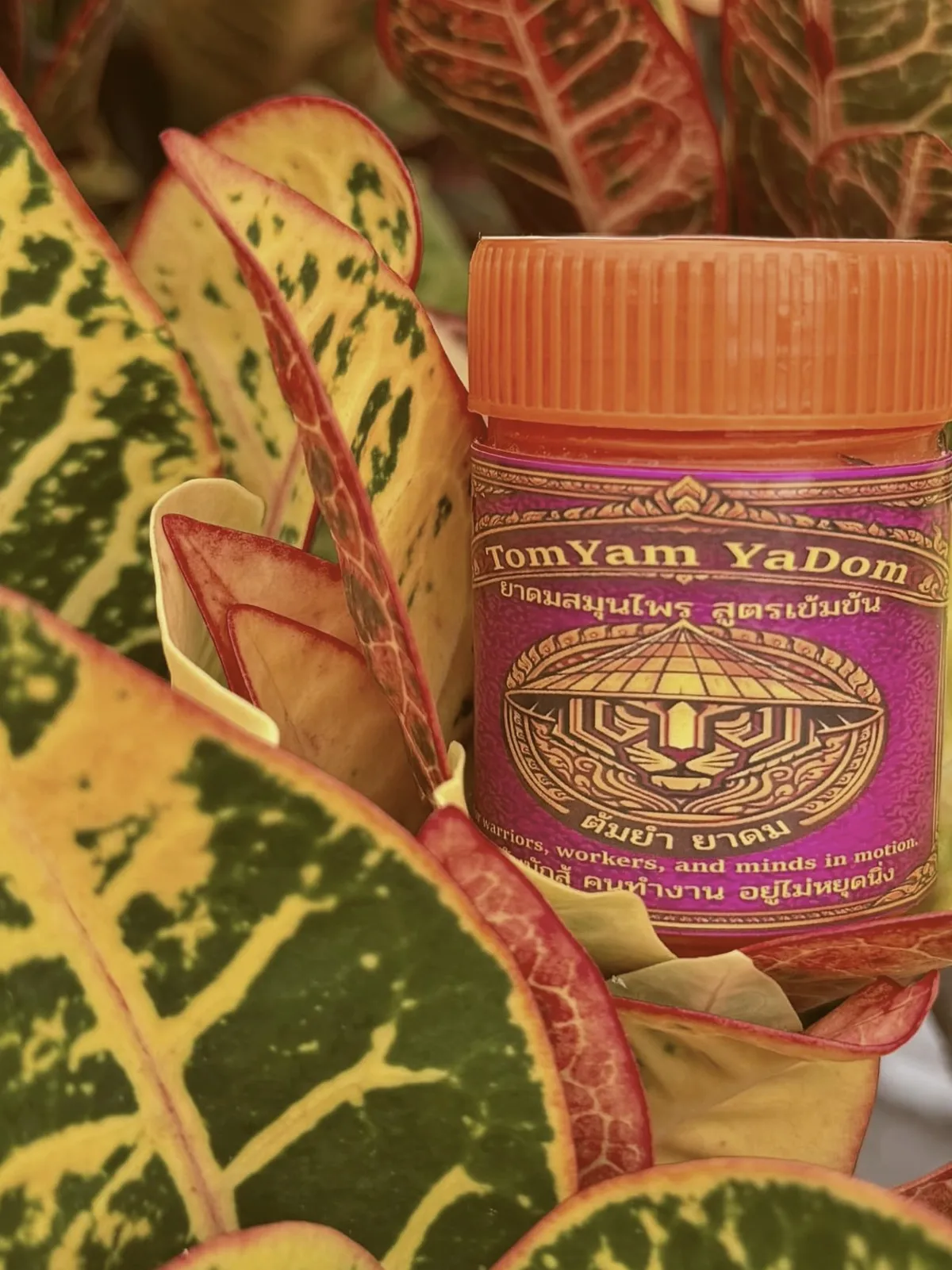 RadianceOptimism. Creativity. Brightness.$20
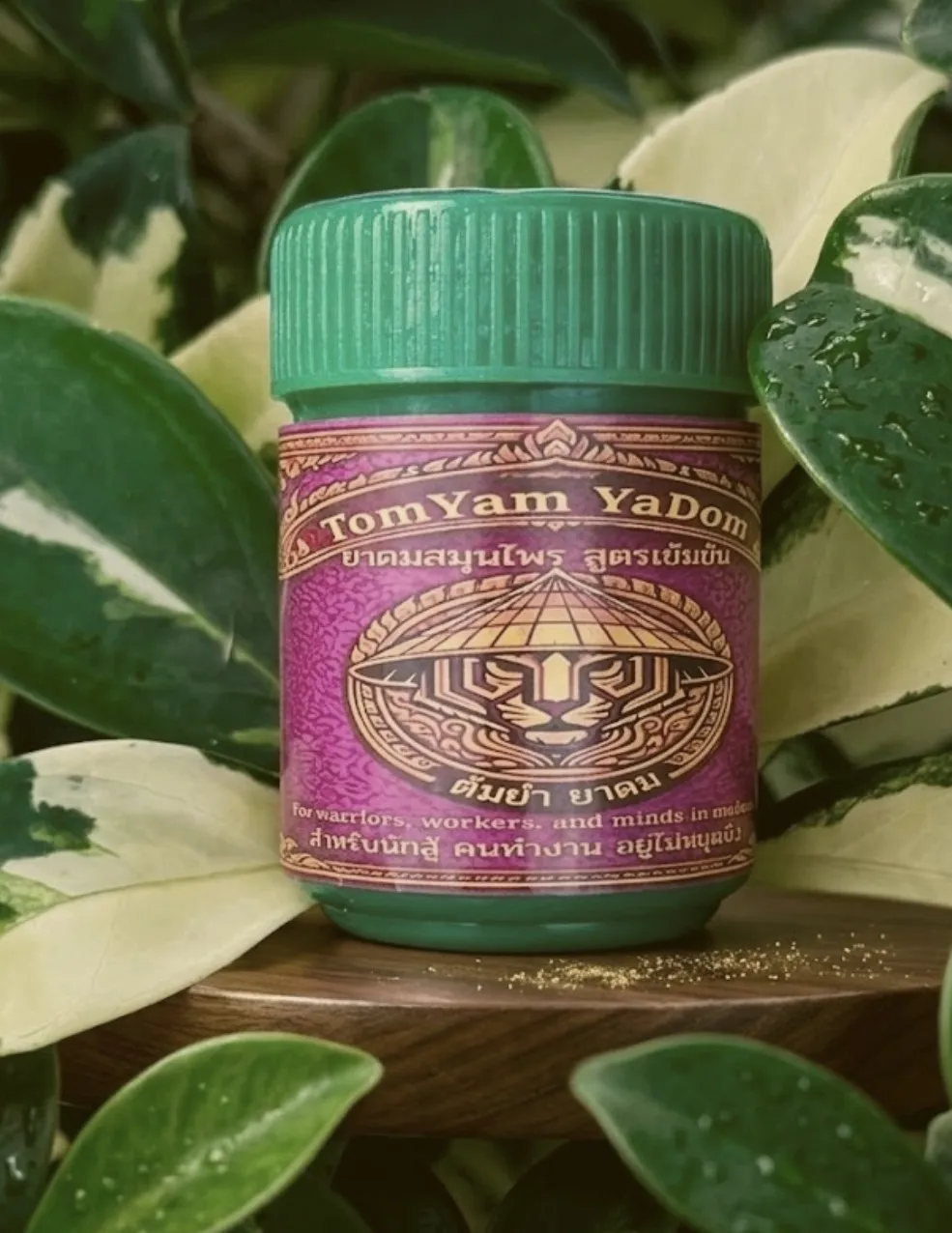 BalanceGround yourself. Come back to center.$20
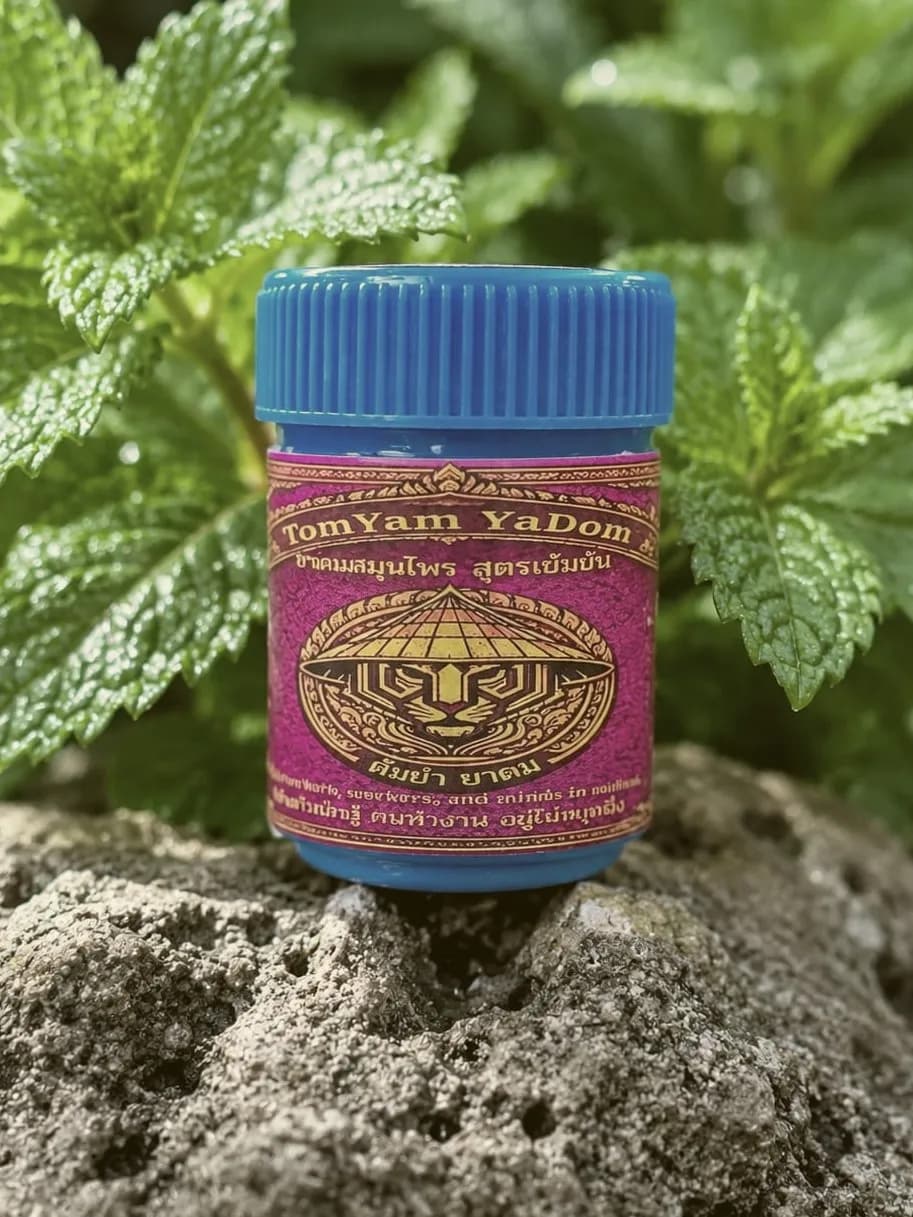 PowerThe morning hit. The pre-fight breath.$20
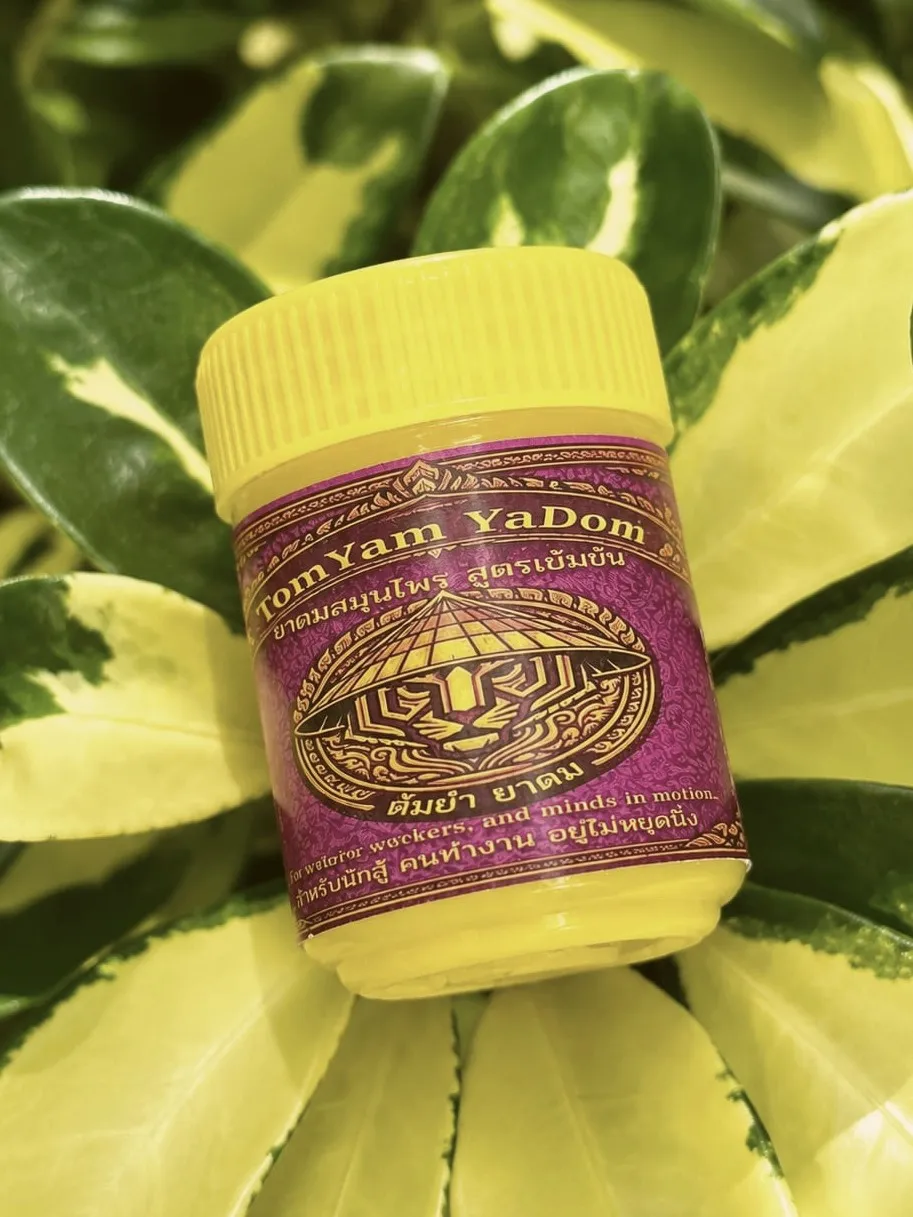 ClarityCool. Pure. Sharpen your focus.$20
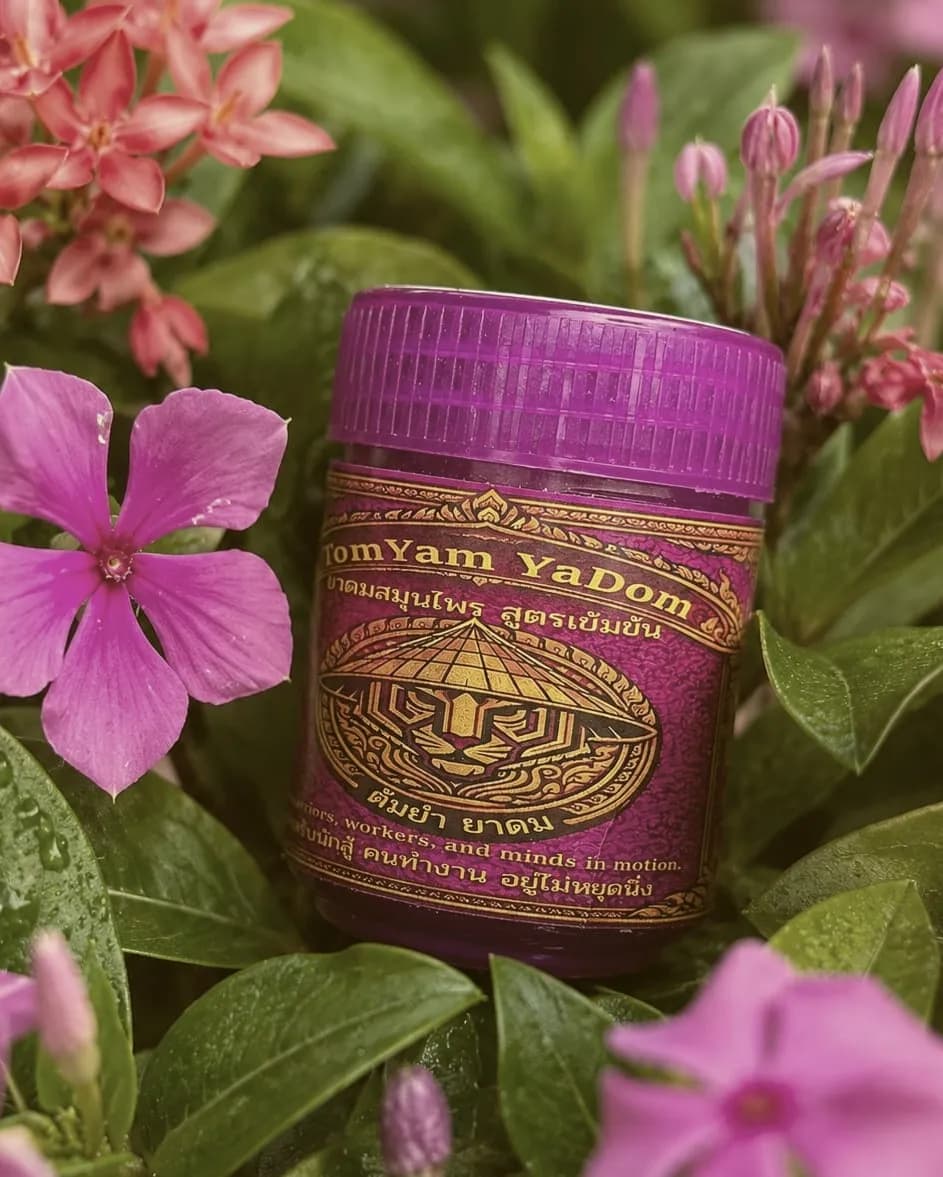 SerenityCalm the mind. Slow the breath.$20
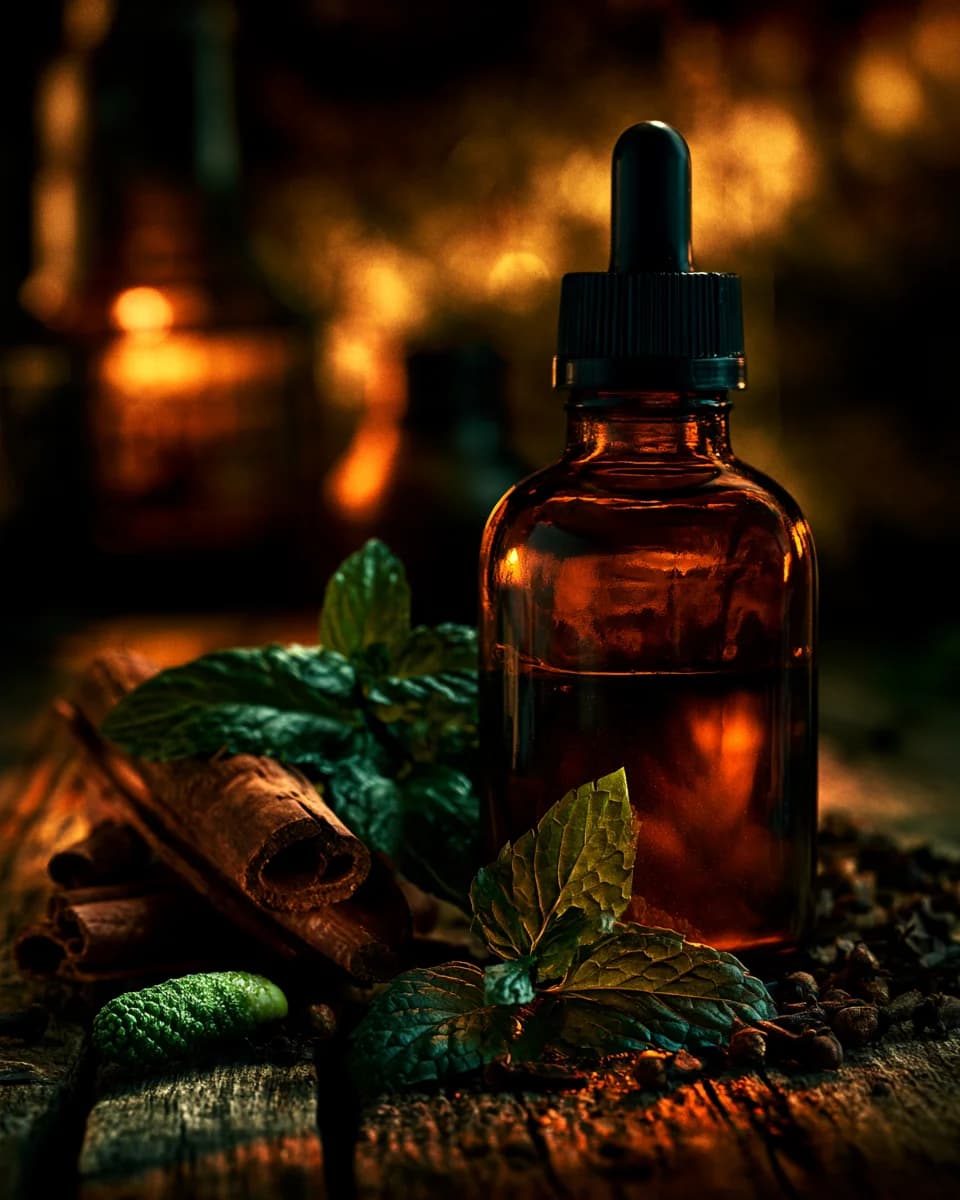 Crown BlendThe concentrated ritual. Stronger. Deeper.$30
 Morning RitualFor the hours you need to think.$54
 Evening RitualFor the end of the day.$54
 Travel RitualFor the car, the plane, the bag.$54
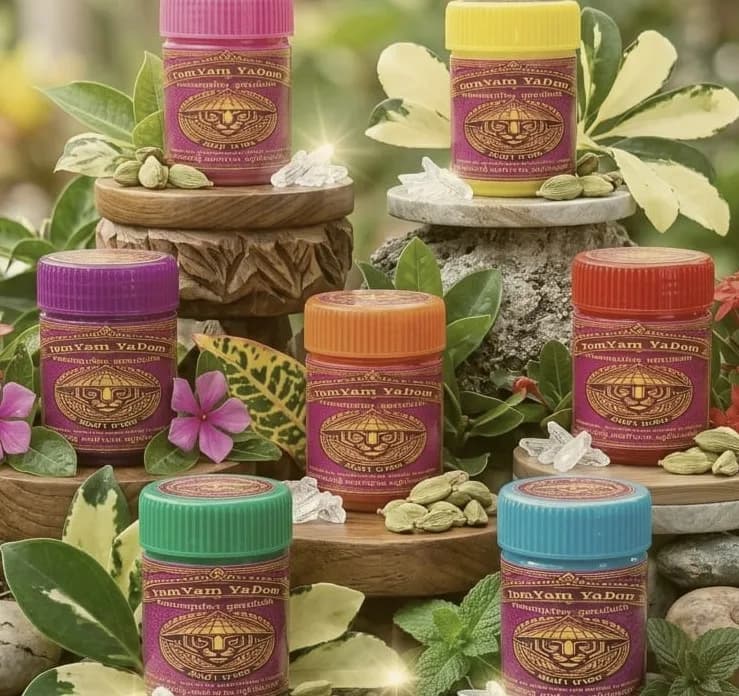 Complete Ritual SetYour complete Thai apothecary. All 7 signature scents plus Crown Blend Oil.$115
Want it on its own terms? Put Camphor in a blend you build yourself.
Common Questions
What does camphor smell like?
Camphor smells intensely cold, resinous, and medicinal, with a woody bite underneath that keeps it from reading as purely chemical. It is sharper and more penetrating than any other cooling note in the apothecary. On its own it is almost too much, which is why it is nearly always blended.
What is the difference between camphor and menthol?
They cool in different registers. Menthol is bright, green, and immediate, while camphor is deeper, drier, and more resinous, with a woody character menthol does not have. A blend that uses both gets a cold that arrives fast and then keeps going, which is the effect a traditional yadom is built around.
Why is camphor in every Smiling Tiger inhaler?
Camphor is one of the seven herbs of the samunprai base, the foundation carried in every traditional yadom, so it appears in all seven scents. It supplies the deep, resinous half of the cooling structure while menthol supplies the bright half. You can also add extra camphor to a custom blend in the builder.
The historical and traditional information presented on this page is for educational and cultural interest only. Tom Yam Yadom products are not intended to diagnose, treat, cure, or prevent any disease or medical condition. Ingredient histories reflect traditional and cultural uses across various societies and are not claims about the properties of our products.