Menthol
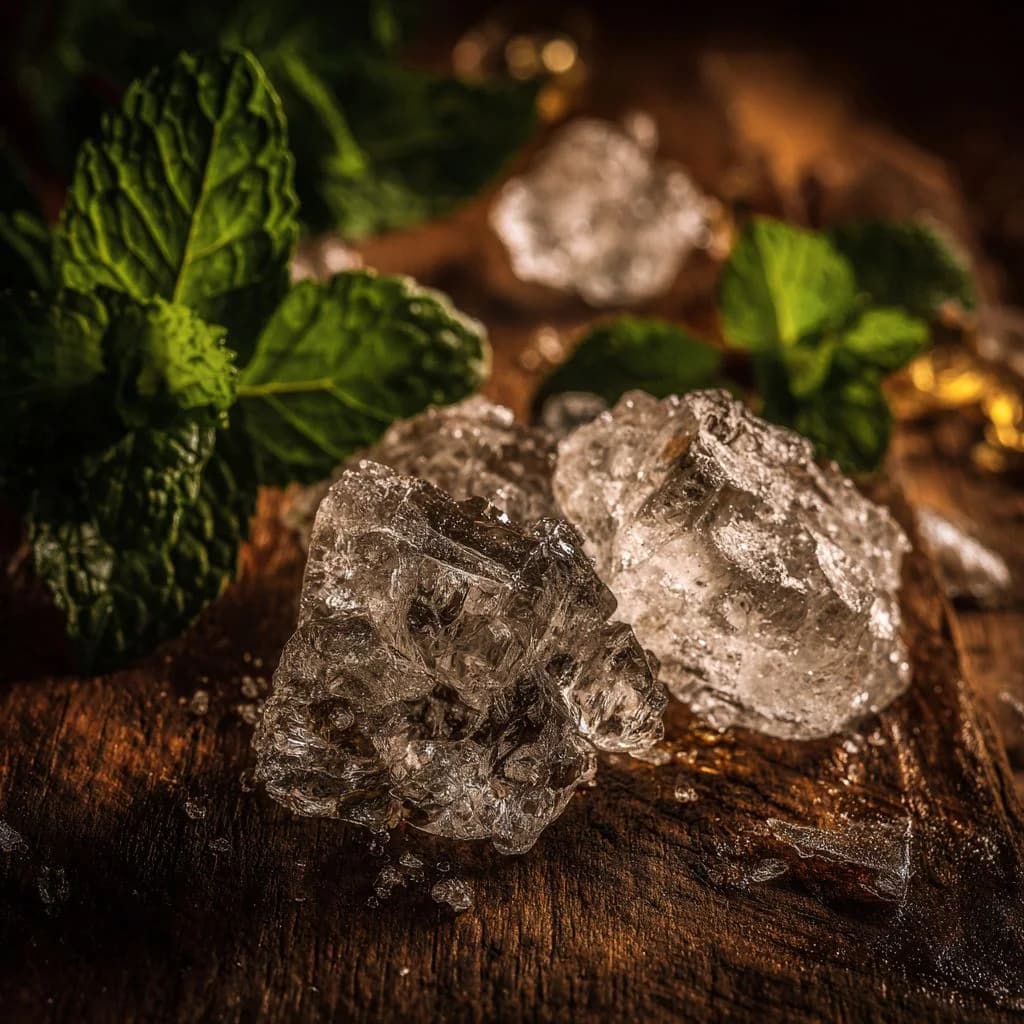
Menthol at a glance
- Botanical Name
- Mentha arvensis
- Family
- Lamiaceae
- Thai Name
- เมนทอล (menthon)
- Origin
- Cultivated across Asia, principally India and Japan
- Part Used
- Crystallised from the distilled leaf oil
- Note Position
- Top, the first thing you meet
Aroma Profile
Sharp, bright, and intensely cooling. Menthol delivers an immediate rush of cold clarity, clean and penetrating, with a freshness that opens the breath on contact.
- Icy
- Sharp
- Green
- Penetrating
- Clean
- Bright
Historical Uses
Menthol has been extracted from peppermint and related mint plants for centuries across Asia and Europe. In Japanese and Chinese traditional practice, menthol crystals were used in aromatic preparations and topical balms valued for their cooling character. In South and Southeast Asia, mint-derived compounds were common ingredients in inhalants, cooling oils, and preparations used by healers and travelers alike. In the Western world, menthol became a key ingredient in the apothecary trade from the 18th century onward, appearing in everything from breath preparations to aromatic salts. Culinarily, mint and menthol have flavored confectionery, tea, and digestifs across dozens of cultures for hundreds of years.
Folklore & Trade
Menthol crystals are made by chilling mint oil until the compound falls out of it in white needles, and for a stretch of the twentieth century almost all of the world's supply came from one cold corner of Japan. Farmers around Kitami in Hokkaido grew hakka mint on a scale that at its peak supplied roughly seventy percent of global menthol, and the town built its civic identity on it, mint money paying for schools and a hall that still stands. The trade collapsed when synthetic menthol and cheaper Indian fields arrived after the war, and the Hokkaido industry never recovered its share, though the distillery museum in Kitami keeps the story. India now grows most of the world's natural menthol mint.
Modern Uses
Today menthol is one of the most widely recognized aromatic compounds in the world. It appears in oral care products, confectionery, cooling balms, and aromatic inhalers. Its crisp, breath-opening character makes it a natural anchor ingredient in any blend designed for alertness and clarity.
From the Apothecary
Menthol is the handshake. It is the note that arrives before you have decided to pay attention, and it is the reason a yadom works in a taxi, in a queue, at the wrong end of an afternoon. We do not treat it as the interesting part of a blend, because it is not. It is the door. What matters is what is standing behind it once the cold clears, and that is where the other six herbs do their work.
Pairs With
Smell It For Yourself
Menthol is in the Smiling Tiger blends below, hand-assembled in the USA and shipped from here.
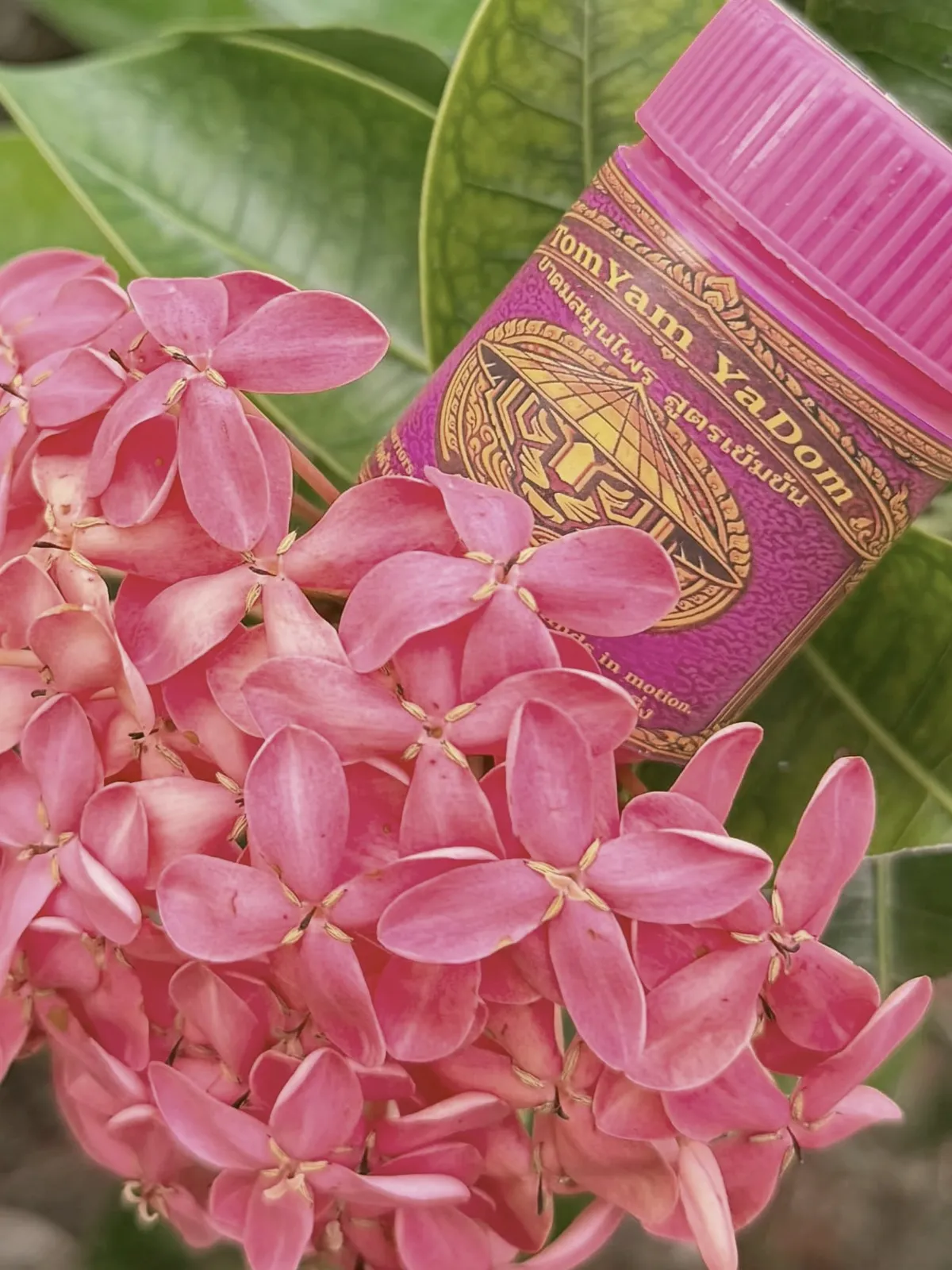 CompassionLift your mood. Open your heart.$20
 VitalityEnergy. Confidence. Drive.$20
 RadianceOptimism. Creativity. Brightness.$20
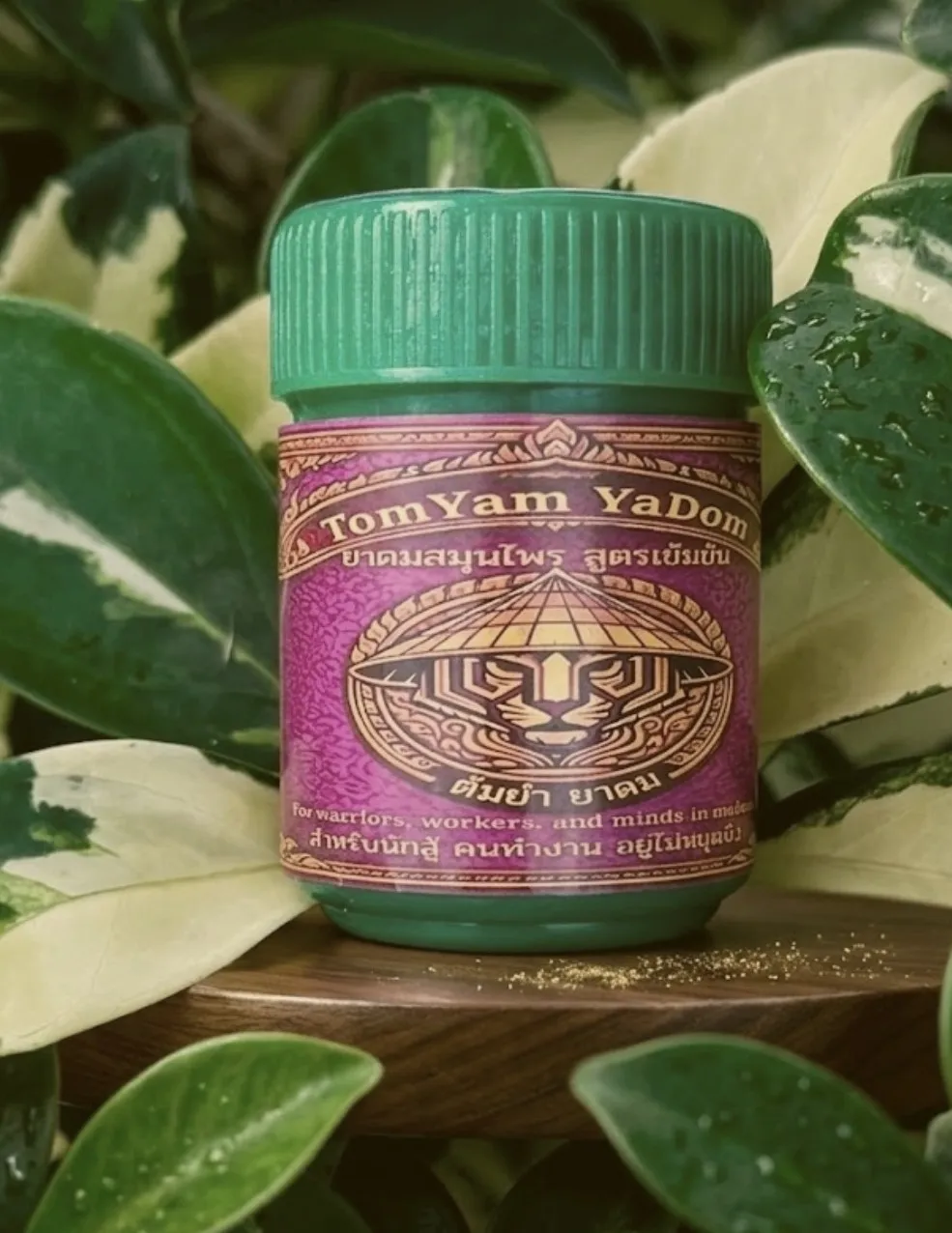 BalanceGround yourself. Come back to center.$20
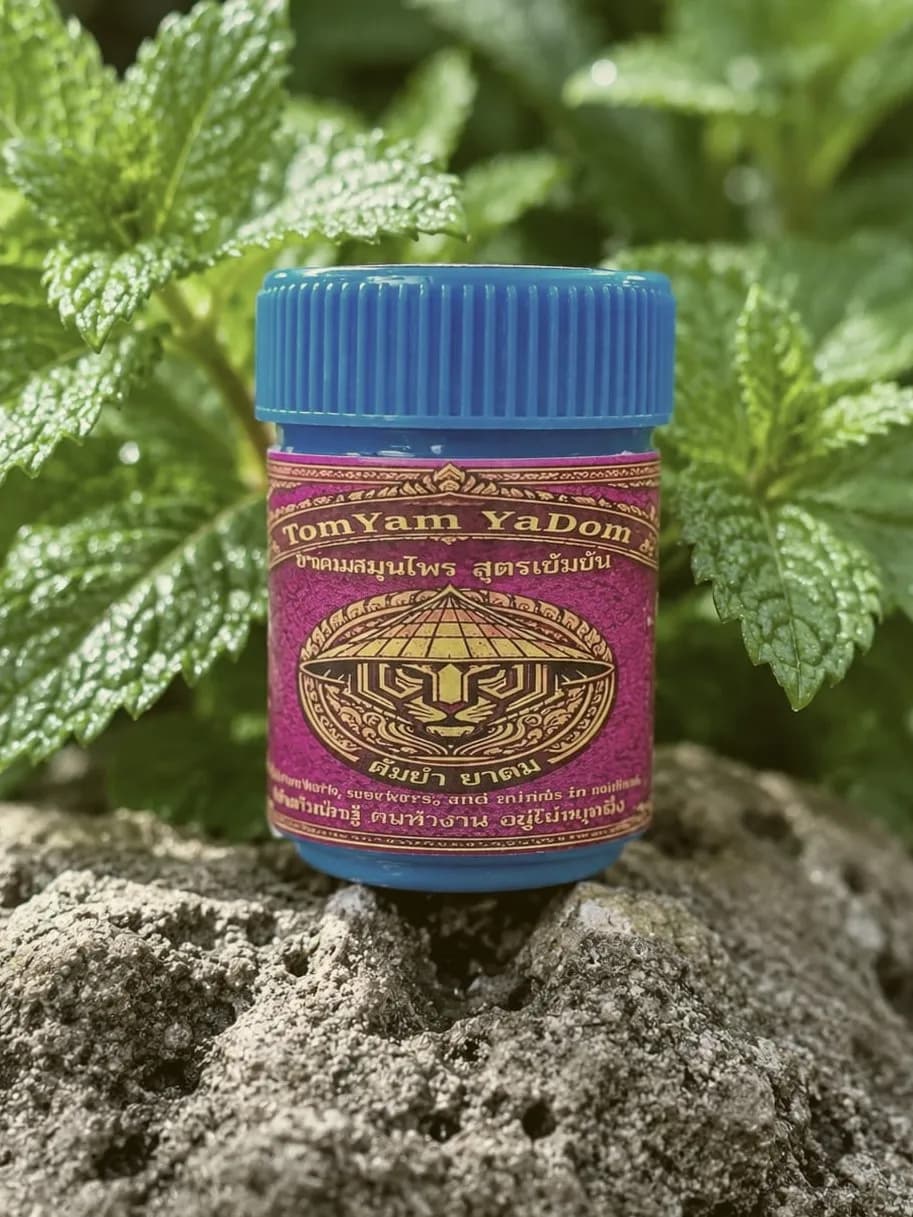 PowerThe morning hit. The pre-fight breath.$20
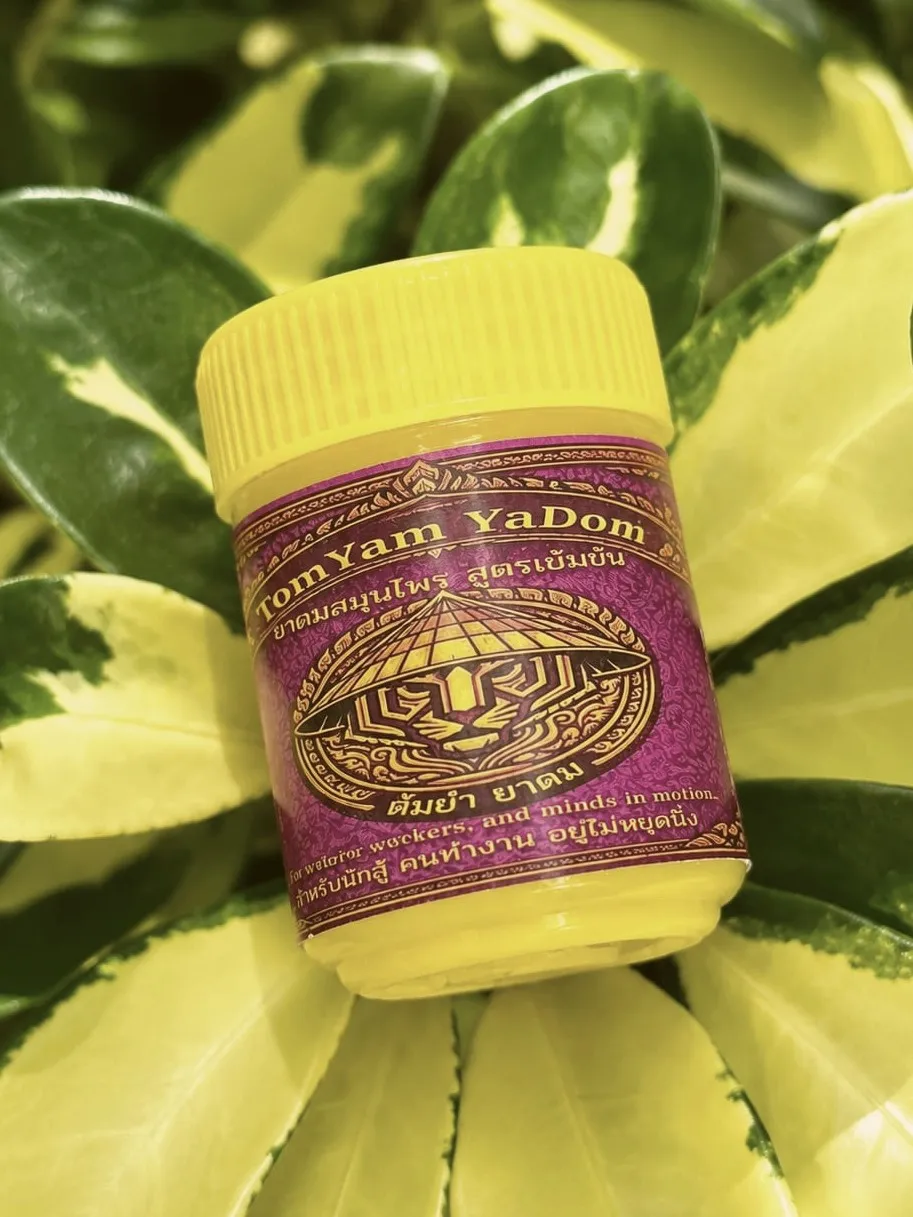 ClarityCool. Pure. Sharpen your focus.$20
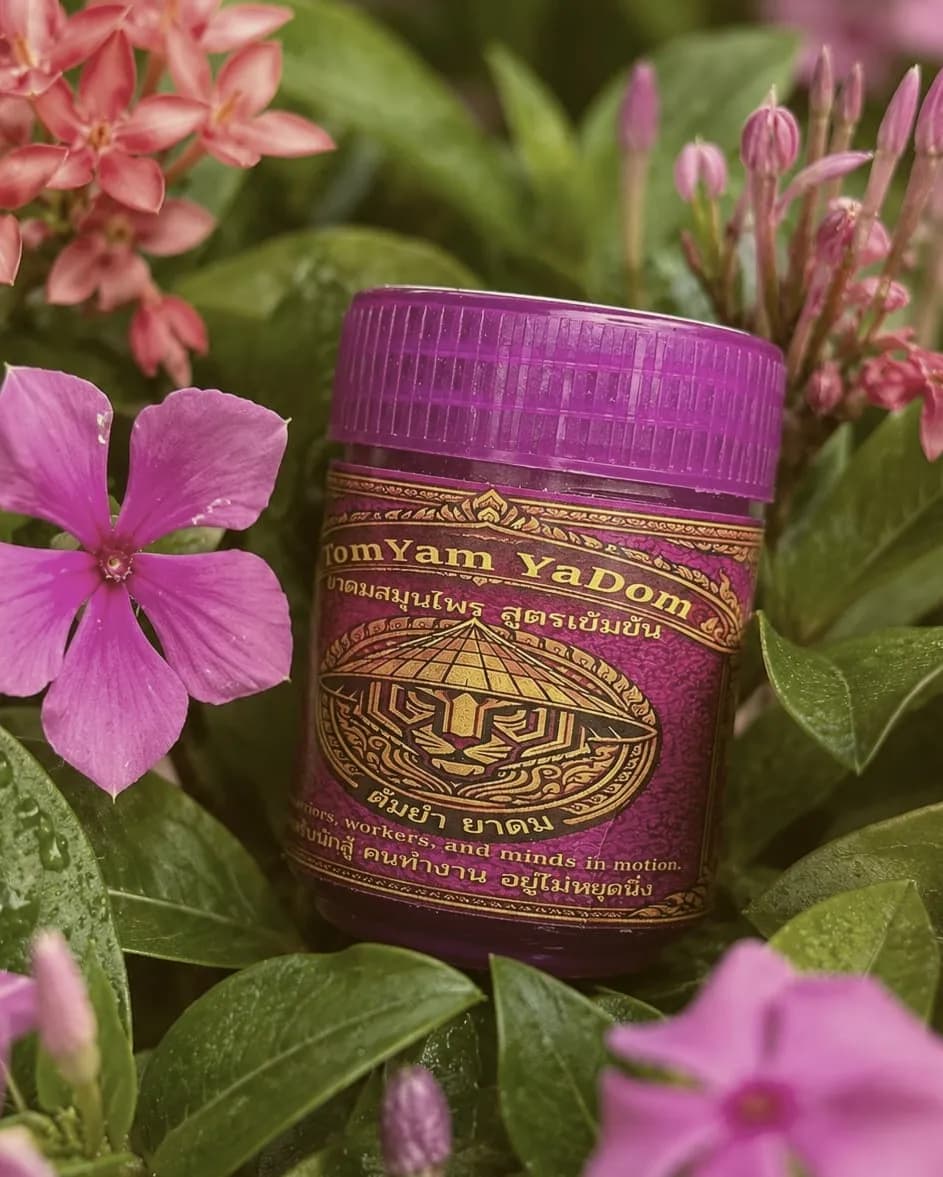 SerenityCalm the mind. Slow the breath.$20
 Crown BlendThe concentrated ritual. Stronger. Deeper.$30
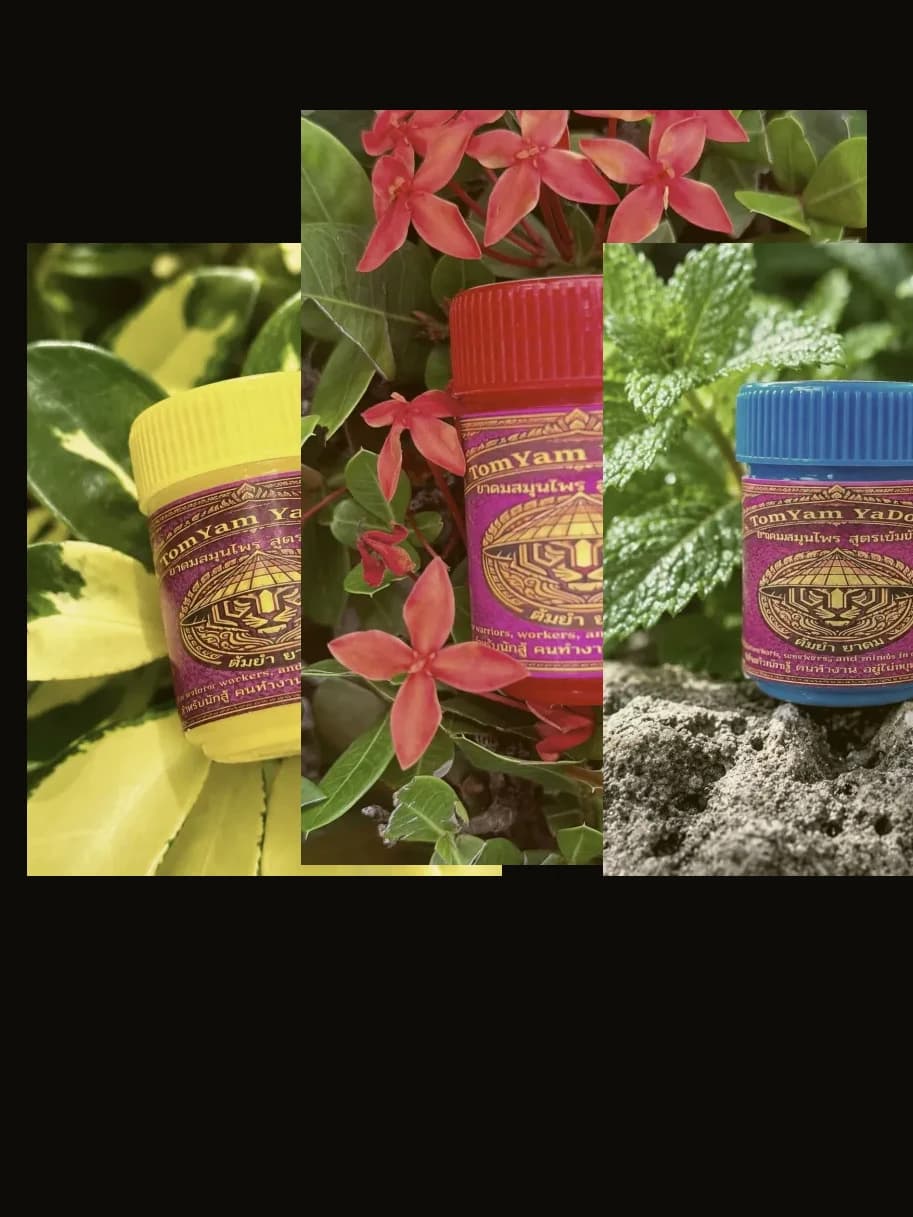 Morning RitualFor the hours you need to think.$54
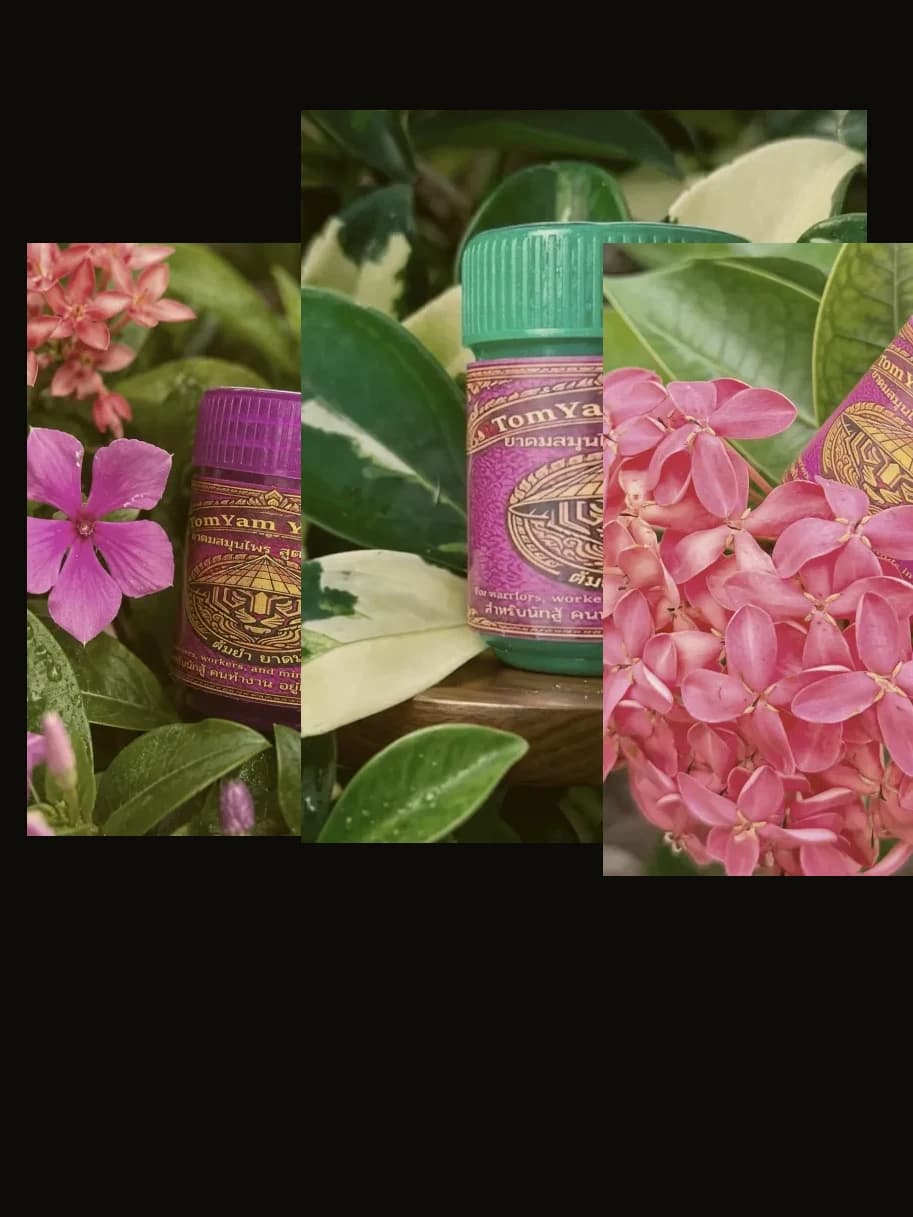 Evening RitualFor the end of the day.$54
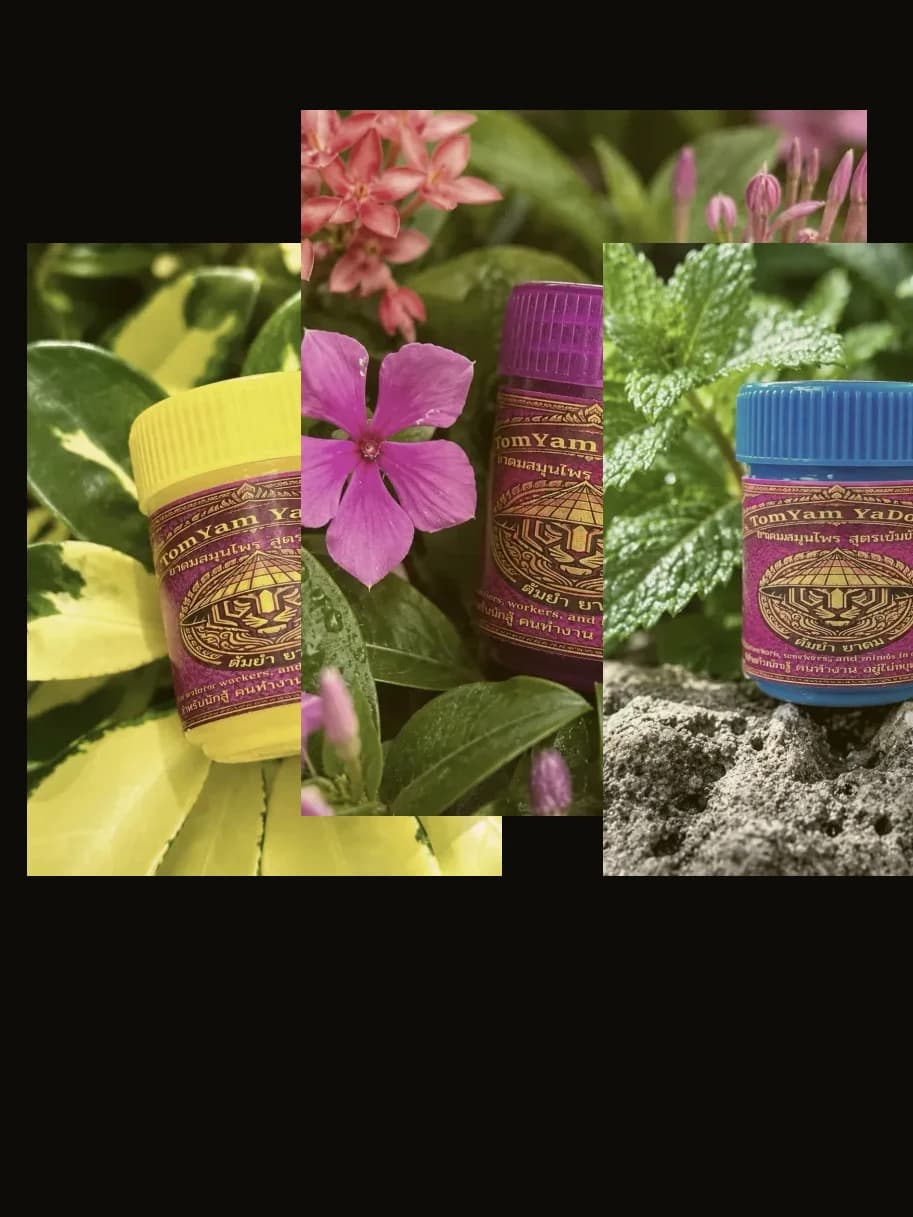 Travel RitualFor the car, the plane, the bag.$54
 Complete Ritual SetYour complete Thai apothecary. All 7 signature scents plus Crown Blend Oil.$115
Want it on its own terms? Put Menthol in a blend you build yourself.
Common Questions
What does menthol smell like?
Menthol smells icy, sharp, and green, with an immediate cold that seems to arrive in the nose rather than on it. It is the cleanest and most recognisable cooling note in aromatics, bright and slightly grassy at the edges. The cold reads as sensation more than as scent, which is why menthol registers so fast.
Is the menthol in a yadom natural or synthetic?
Ours is crystallised from mint oil rather than made in a lab. Both forms are chemically the same compound, but natural crystals carry trace aromatics from the leaf that the isolated synthetic version does not, which gives them a slightly green, rounder character. It is a small difference and it matters most in a blend this simple.
Why is menthol in every Thai herbal inhaler?
Menthol is one of the seven herbs in the samunprai base, the foundation every traditional yadom is built on, so it is in all seven Smiling Tiger scents. It sits at the top of the composition and opens the way for the warmer and deeper notes underneath. Without it a yadom would read as a perfume rather than as a yadom.
The historical and traditional information presented on this page is for educational and cultural interest only. Tom Yam Yadom products are not intended to diagnose, treat, cure, or prevent any disease or medical condition. Ingredient histories reflect traditional and cultural uses across various societies and are not claims about the properties of our products.